Vintage cast iron cookware restoration for Brookline, Vermont is handled entirely by mail-in service from a dedicated bench in southern Vermont. We clean, strip, re-season, and repair vintage skillets, Dutch ovens, griddles, and other cast iron pieces for customers across Windham County and the surrounding hill towns. Local in-person drop-off is in the works for Brookline and nearby communities, though that option is not available quite yet.
Brookline and the Cast Iron That Lives Here
Brookline is one of the smallest and quietest towns in Windham County, a place of dirt roads, old farmsteads, and a population that has stayed modest for generations. The town sits in the West River valley corridor but climbs into the surrounding hills, where farms and woodlots have defined the landscape for well over two centuries. That long agricultural history is exactly the kind of ground where vintage cast iron accumulates - passed down through farm families, stored in barns, left in sugar shacks, or discovered at the back of a cellar shelf in a house that hasn't changed hands since the mid-twentieth century.
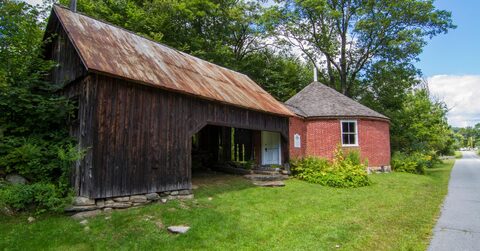
The housing stock in Brookline reflects its deep rural roots. Many homes here are old Vermont farmhouses with attached ells and sheds, the kind of connected architecture that sheltered animals and equipment through hard winters and kept cast iron close to the working kitchen. These structures were built before electric ranges were common, and the cookware that served those wood and coal stoves is often still around - heavy, capable pieces from foundries like Griswold, Wagner, and Lodge that were made to last and largely did.
What Southern Vermont's Climate Does to Cast Iron
Brookline's climate is honest about its severity. Winters are long and cold, summers are humid, and the shoulder seasons bring repeated cycles of freeze and thaw that are hard on anything made of iron left unprotected. A skillet stored in an unheated barn or a summer camp goes through dramatic swings in temperature and moisture. That cycle accelerates rust formation in ways that a piece stored in a dry, climate-controlled kitchen simply never experiences.
The town's elevation and its position in a valley surrounded by forested hills means that fog and ground moisture linger, especially in spring. An outbuilding in Brookline can stay damp well into May. Cast iron left in those conditions without proper seasoning - or with a seasoning layer that has been compromised by years of neglect - will rust in ways that look catastrophic but are often fully recoverable with professional restoration. Understanding that distinction is one of the things that makes working with a specialist worthwhile.
The Pieces Brookline Customers Typically Send In
The cast iron that comes out of Brookline's farms and older homes tends to be genuinely old and genuinely interesting. Estate sales in small Windham County towns regularly surface pieces that have been in one family for seventy or eighty years. Barn cleanouts after a property changes hands are another common source. The items are often working cookware rather than decorative pieces - skillets in the number 8 and number 10 sizes that were used daily, covered Dutch ovens for long braises and bread baking on wood stoves, and flat griddles sized for a large farm kitchen range.
Common reasons customers reach out include deep surface rust that covers the entire cooking surface, a sticky or gummy seasoning layer that built up when a well-meaning family member re-seasoned with the wrong oil at the wrong temperature, cracks discovered on close inspection, warped bases from thermal shock, and pieces that were cleaned in a dishwasher or soaked in water and never properly dried. Some pieces arrive with paint on them - not factory finish, but actual house paint or stove blacking that someone applied at some point in the piece's long life. All of these situations are worth evaluating.
Why the Antique Trade in This Region Matters
The Connecticut River valley and the roads connecting Windham County's hill towns have supported a lively antique trade for decades. Dealers, pickers, and collectors move through small Vermont towns regularly, and Brookline's proximity to larger antique markets in the region means that estate pieces flow through fairly often. A buyer who picks up a Griswold skillet at a local sale may have a beautiful piece with a solid gate mark and a legible heat ring but a surface covered in rust and old grease. That piece is worth restoring properly rather than scrubbing down casually and calling it done.
Collectors who are serious about vintage cast iron understand that improper cleaning - harsh wire brushes, oven cleaner left on too long, sandblasting with the wrong media - can permanently damage the machined cooking surface that makes old Griswold and Wagner pieces so desirable. Our services page outlines exactly what restoration involves at each stage, and it is worth reading before any piece is cleaned at home. The difference between a properly restored antique skillet and one that has been aggressively abraded is significant and permanent.
How the Mail-In Process Works for Brookline Customers
Because this is a mail-in service, geography is not a barrier. A Brookline customer packs their piece in a sturdy box with padding - cast iron ships well when wrapped properly - and sends it in. The piece is evaluated at the bench, and any notable findings about condition, markings, or restoration approach are communicated before major work proceeds. If you have questions before shipping, the free consultation page is the right place to start.
Once the piece arrives, restoration moves through inspection, stripping of old seasoning and rust using methods appropriate to the piece's age and condition, surface treatment, and re-seasoning with oils and temperatures chosen to build a durable, even finish. The finished piece is shipped back to Brookline ready to cook on. For pieces with sentimental value - a grandmother's Dutch oven, a skillet that came with the farmhouse - the process is handled with that history in mind. Our common questions page covers packaging, shipping, turnaround, and what to expect in plain terms.
What Good Restoration Actually Involves
Stripping and re-seasoning cast iron sounds straightforward, but the details matter considerably. The electrolysis method of rust removal, for example, is effective and gentle on the iron's surface, but it requires careful setup and monitoring. Lye-based stripping is another option that works well for heavy grease buildup. The choice of method depends on the piece's condition, its age, and what the surface looks like underneath the rust and old seasoning.
Re-seasoning is not simply applying oil and putting the piece in an oven. The type of oil, the temperature, the number of layers, and the cure time between layers all affect the quality and durability of the finished surface. A thin, hard, properly polymerized seasoning layer looks darker and more uniform than a thick, soft one, and it releases food reliably rather than building up sticky residue over time. Getting this right on an old piece with an already-smooth machined surface - the kind of surface that comes standard on Griswold and early Wagner production - produces a result that is genuinely superior to new cast iron.
Common Mistakes Worth Knowing Before You Ship
The most frequent mistake people in older Vermont homes make with neglected cast iron is reaching for a wire brush or steel wool and scrubbing aggressively before understanding what they are working with. On a rough modern casting, surface abrasion does relatively little harm. On a smooth, machine-polished antique, it removes the very quality that makes the piece cook so well. If you find a skillet in a Brookline barn with a mirror-smooth interior, do not scrub it. Pack it carefully and send it in instead.
The second common mistake is incomplete drying after any wet cleaning. A piece that comes out of a cleaning bath and is not dried immediately and thoroughly - either on a warm stovetop or in a low oven - will start rusting again within hours in Vermont's damp air. Incomplete seasoning after drying is the third mistake: one thin layer of oil is rarely enough to protect iron that has been fully stripped. These are the kinds of details that separate a piece that stays beautiful for another generation from one that ends up rusting again in a drawer.
Choosing Professional Restoration in Brookline
Brookline is the kind of town where things get kept and used. The culture here is not particularly interested in disposable goods, and when something solid and old comes out of a family barn or a cellar, the instinct is often to fix it rather than replace it. That instinct is exactly right with vintage cast iron, which improves with proper care and can genuinely last another century if it is handled well now.
The areas we serve page shows the full scope of southern Vermont communities we work with, and Brookline sits comfortably within that range. Whether the piece is a workhorse skillet used for decades of farm breakfasts or a carefully collected antique that needs a professional finish to reach its potential, the mail-in process puts expert restoration within reach for any Brookline household. In-person drop-off and local pickup coordination for Windham County is something we are actively building toward, and Brookline will be included when that service opens.
Sub-Areas and Neighboring Communities
Brookline's immediate neighbors - the West River corridor towns and the surrounding Windham County hill towns - share the same cast iron heritage: old farms, wood stove culture, sugaring operations, and hunting camps where a heavy skillet was essential equipment. Pieces move between these communities through family connections, estate sales, and the informal networks that characterize rural Vermont. If you are in a neighboring town and found your way to this page, the areas we serve index will confirm coverage, and the process is the same regardless of which Windham County town you call home.
FAQ
Questions about Brookline
- I found a badly rusted skillet in a Brookline barn - is it worth restoring or too far gone?
- Rust found in an unheated Vermont barn almost never means a piece is beyond saving. Surface rust, even when it covers the entire cooking surface and looks alarming, is nearly always removable through electrolysis or lye treatment. What matters more is whether the iron itself is cracked or pitted deeply enough to compromise the surface. Send us a photo through the consultation page before assuming the worst - barn finds from Windham County farms are frequently excellent candidates for full restoration.
- How do I pack a heavy Dutch oven to ship it safely from Brookline?
- A cast iron Dutch oven ships safely when wrapped snugly in several layers of bubble wrap or foam and placed in a box with at least two inches of packing material on every side. Double-boxing adds meaningful protection for heavier pieces. Avoid newspaper alone, which compresses too easily. Cast iron is dense and tough, but a hard impact during transit can crack a lid or a thin rim. Our FAQ page covers packaging in more detail, and we are happy to answer specific questions before you ship.
- Someone in my family re-seasoned an old Griswold skillet with vegetable oil and now it is sticky - can that be fixed?
- Yes, and this is one of the most common restoration requests we receive. A gummy or sticky seasoning layer results from oil that was applied too thickly or polymerized at too low a temperature. The fix involves fully stripping the old seasoning back to bare iron and building a new seasoning from scratch using the correct oil type, temperature, and layering process. The good news is that the Griswold iron underneath is almost certainly still in excellent shape and will cook beautifully once the surface is properly rebuilt.
- My farmhouse in Brookline has a wood cookstove - will a restored skillet hold up on it?
- Cast iron was designed for exactly this kind of use, and a properly restored, well-seasoned piece performs better on a wood cookstove than almost any other surface. The key is managing heat gradually - wood stoves can run very hot, and bringing cast iron up to temperature slowly avoids thermal stress. The re-seasoning we apply is heat-cured and durable. After restoration, your piece will handle a wood stove reliably for decades with basic ongoing care.
- I bought a vintage skillet at an antique sale in the area and want to know if it is worth restoring or collecting - can you help identify it?
- Identification is part of the evaluation process. Markings on vintage cast iron - heat rings, gate marks, model numbers, and foundry logos - tell us a great deal about age and origin. Griswold and Wagner pieces from certain production eras are particularly desirable and worth careful professional restoration rather than casual home cleaning. Share photos through our consultation page and we can give you an honest read on what you have and what restoration would involve before you commit to shipping it in.
- Will in-person drop-off ever be available in Brookline or nearby Windham County towns?
- Yes, local in-person drop-off and pickup coordination for Brookline and the surrounding Windham County area is something we are actively working toward. It is not available today, but it is on the near horizon. In the meantime, the mail-in process works well for Brookline customers, and pieces travel safely when packed correctly. We will update the areas we serve page when local drop-off is ready to open, so that is a good place to check back.
Start a restoration
Tell us what you have
Send a couple of photos and the markings you can read on the bottom. We will tell you what the piece is, what it needs, and what it costs before anything ships. Identification and assessment are free, and stay free if you decide to do nothing.
Would rather just talk it through? (802) 348-1550