| Piece | Also called | Era | Known for | How common |
|---|---|---|---|---|
| Skillets and frying pans | Frypan, spider, fry pan | c. 1870s - 1960s | The piece almost everyone starts with, and the one where flatness matters more than the name | Everyday |
| Dutch ovens | Bean pot, kettle, casserole | c. 1870s - 1960s | A lidded pot that is really two objects, and the lid is the one that usually went missing | Moderate |
| Camp ovens and footed pots | Three-legged spider, camp Dutch oven | nineteenth century - present | Legs and a flanged lid, built to sit in a fire rather than on a stove | Moderate |
| Griddles and grill pans | Round griddle, long griddle, handled griddle | c. 1880s - 1960s | Flat, thin and large, which makes warping the first thing to check | Everyday |
| Cornstick pans | Corn stick pan, corn pone pan, krusty korn kob | c. 1900s - 1960s | Shaped pans where the detail in the cavities is the whole point and the hardest thing to clean | Moderate |
| Gem and muffin pans | Gem pan, popover pan, Turks head, French roll pan | c. 1880s - 1950s | A large and confusing family of shaped baking pans, some of them genuinely rare | Moderate |
| Waffle irons and their bases | Low base, high base, wafer iron | c. 1880s - 1950s | A hinged pair of paddles plus a base ring, and the base is what makes it complete | Moderate |
| Kettles, cauldrons and pots | Bean pot, apple butter kettle, scotch bowl | nineteenth century - mid twentieth | The big, heavy, often outdoor pieces, and how to tell a cooking vessel from a rendering kettle | Moderate |
| Deep skillets and chicken fryers | Chicken fryer, deep fryer, dutch oven skillet | c. 1900s - 1960s | A skillet with sides and usually a lid, which is the most useful single piece most kitchens lack | Everyday |
| Roasters and oval pieces | Oval roaster, oval Dutch oven, fish pan | c. 1900s - 1960s | The oval family, where lid fit and completeness drive almost everything | Moderate |
| Lids and covers | Cover, self-basting lid, glass lid, orphan lid | c. 1890s - 1960s | Half of every lidded piece, routinely lost, and worth far more on its own than people expect | Moderate |
| Trivets and stands | Trivet, stand, heat ring stand | c. 1880s - 1950s | Small, cheap to fake, and one of the few places reproductions genuinely flood the market | Everyday |
| Enameled cast iron | Porcelain enamel, vitreous enamel, coated iron | c. 1920s - present | Iron under a glass coat, which changes every rule about restoration and about damage | Moderate |
| Sad irons, kettles and other non-cookware | Sad iron, flat iron, boot scraper, mortar | nineteenth - mid twentieth century | The household iron people bring in alongside the pans, and what can and cannot be treated the same way | Everyday |
One page each
Read a maker in full
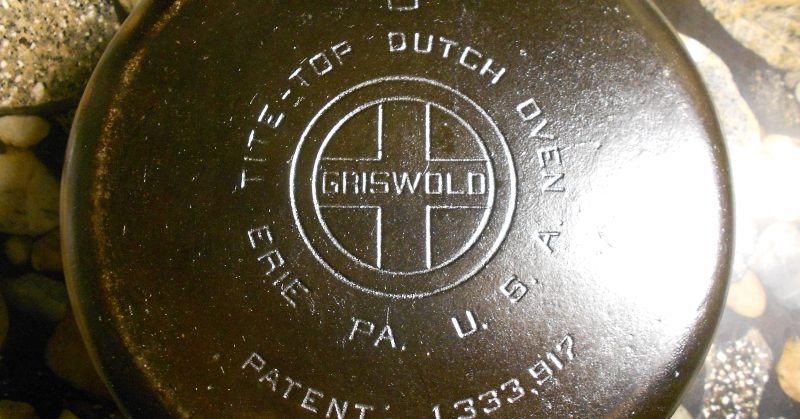
Erie, Pennsylvania
Griswold Manufacturing Company
Sidney, Ohio
Wagner Manufacturing Company
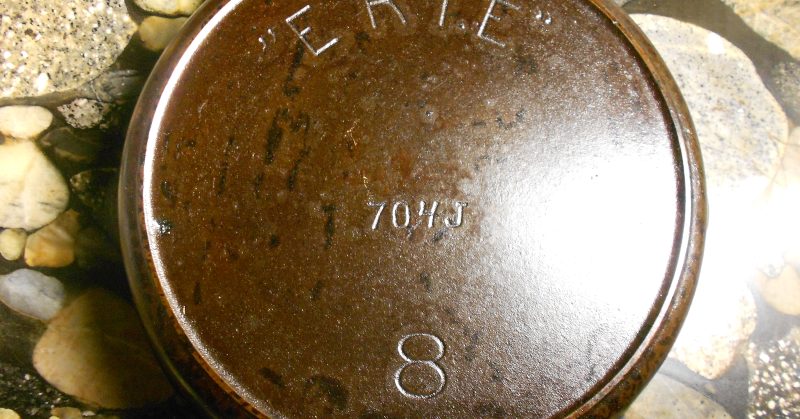
Erie, Pennsylvania
Erie and the early Griswold marks
Piqua, Ohio
Favorite Stove and Range Company
Wapakoneta, Ohio
Wapak Hollow Ware Company
Sidney, Ohio
Sidney Hollow Ware Company
Birmingham, Alabama
Birmingham Stove and Range
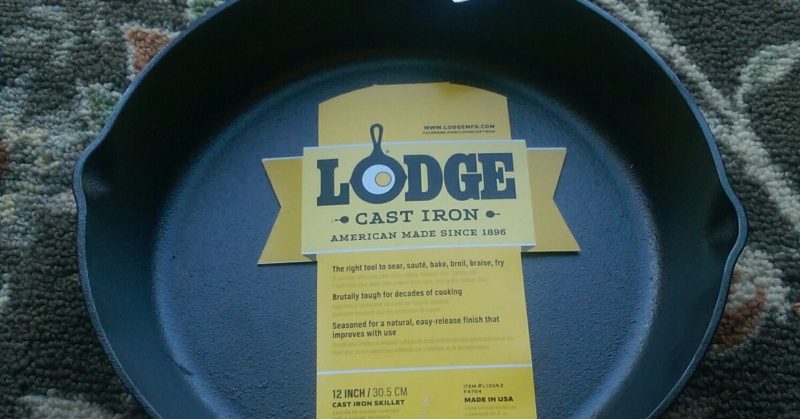
South Pittsburg, Tennessee
Lodge Manufacturing Company
South Pittsburg, Tennessee
Blacklock Foundry
Florence, Alabama
Martin Stove and Range Company
Sheboygan, Wisconsin
The Vollrath Company
North Chicago, Illinois
Chicago Hardware Foundry Company
Atlanta, Georgia
Atlanta Stove Works
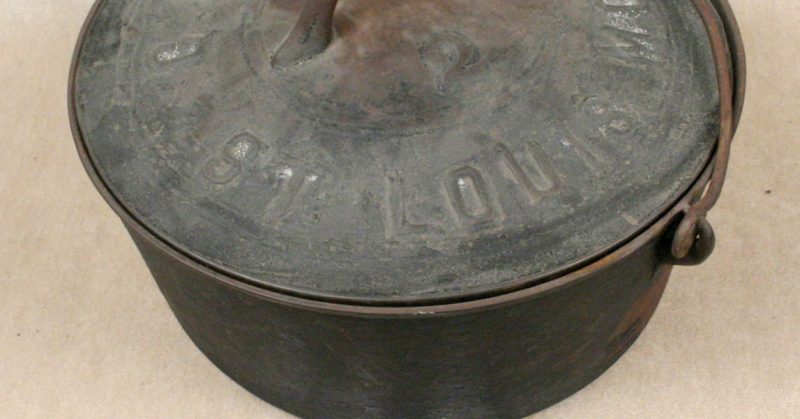
Troy and St Louis, New York and Missouri
Filley
Columbus, Ohio
Columbus Hollow Ware
Cincinnati, Ohio
W. C. Davis and Company
Sidney, Ohio
General Housewares Corporation
Store brands and jobber marks
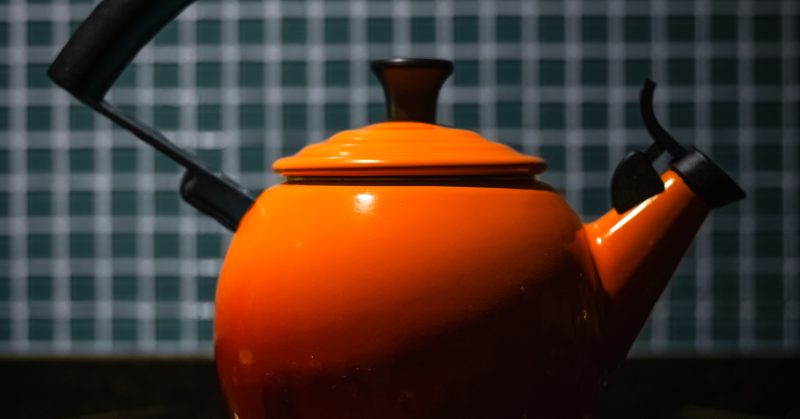
Fresnoy-le-Grand, France
Le Creuset
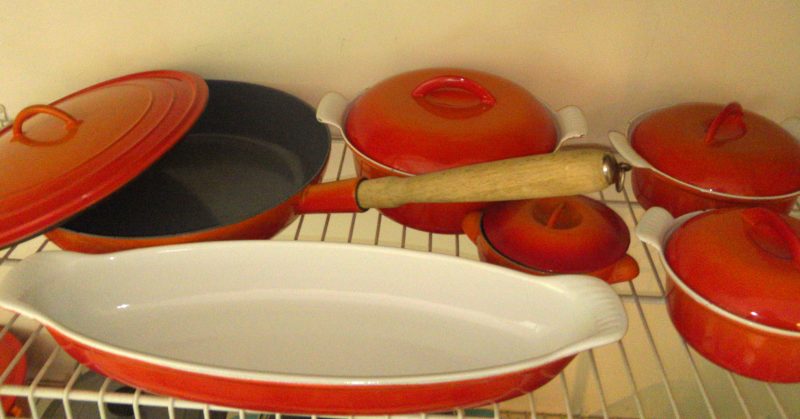
Belgium
Descoware
Alsace, France
Staub
Imports, reproductions and faked marks
Unmarked and unattributed pieces
How to use this
Buy the piece you will actually use
The question people bring to cast iron is usually "which maker?" They want to know whether Griswold is better than Wagner, whether an Erie skillet outperforms a Lodge, whether the three-notch gate mark means something. Those are real questions, and the cookware directory addresses them piece by piece. But they are the second questions, not the first. The first question is: what shape of pan will you actually put on the fire? A Griswold skillet you use twice a year is not a better purchase than a plain no-name skillet you use three times a week. Cast iron rewards repetition. The seasoning improves, the cooking improves, the pan becomes part of how you think in the kitchen. So buy the thing you will cook in. Everything else follows from that.
The number 8 and the number 10
For almost everyone, the right first piece is a number 8 or a number 10 skillet. Not both. One.
A number 8 skillet runs roughly nine inches across the cooking surface. It handles two steaks, a chicken breast or two, a frittata for two people, cornbread in a wedge pan or straight in the skillet itself. It heats quickly for its weight and fits easily on a home burner without overhanging the element. A number 10 - roughly eleven and a half inches - crosses into the territory of family cooking. Four chops, a full batch of bacon, a shallow braise for four. It is heavier and the heat distribution across a large modern burner can be uneven at the edges, but that is a technique problem, not a defect, and it corrects itself over time.
The numbers below 8 are not starter pieces. A number 3 or number 4 skillet is excellent for a single egg, a knob of butter, a small sauce. People buy them because they are charming and inexpensive. They use them occasionally. A number 5 or 6 is genuinely useful as a secondary pan - blistering a small piece of fish while the number 8 handles something else - but it is not the pan a household builds around. The numbers above 10 get heavy fast. A number 12 is a serious piece of equipment for a serious cook who regularly feeds a crowd. A number 14 will not fit inside most residential ovens. Buy down in size before you buy up.
Dutch Ovens
A Dutch oven earns its shelf space if you braise, if you bake bread in a covered vessel, or if you cook over a campfire or in a hearth. It does not earn its shelf space if you already own a quality enameled steel or stainless pot and you cook primarily on a modern range. A bare cast iron Dutch oven requires the same seasoning care as a skillet, and the inside of a deep vessel is harder to maintain than a flat cooking surface. Moisture from braising liquids strips seasoning from bare iron in a way that a quick sear does not. That is not a reason to avoid the piece, but it is a reason to understand what you are agreeing to before you buy one.
The legged Dutch oven - sometimes called a camp oven or camp Dutch - is a different tool entirely. The legs hold the pot above coals on the ground, and the flanged lid holds coals on top. This is a fire piece, not a stove piece, and it is covered in its own right below. A flat-bottomed Dutch oven without legs is the kitchen piece. The two are not interchangeable in any practical sense.
Pieces people buy and never use
The waffle iron. Beautiful, specific, and almost entirely unused in most households within a year of purchase. Antique cast iron waffle irons require heat management that takes practice, and the irons that span two burners require a level of attention that modern cooks rarely have time for. They are legitimate collector objects. They are not weekday breakfast equipment.
The gem pan and the cornstick pan. Charming in photographs. The cornstick pan in particular requires the batter to be poured into a very hot, well-seasoned pan in exactly the right quantity or the sticks stick and break apart. The gem pan produces small, slightly fussy individual muffins. Neither of these is a hardship to use correctly, but both require more commitment than people expect, and both tend to migrate to the back of the cabinet. If you bake regularly and you want these results, they are worth learning. If you are buying them because they look good, that is a collector's purchase and there is nothing wrong with that - just name it honestly to yourself.
The griddle. Long, flat, two-burner griddles are purchased with breakfast in mind and stored with regret. The cooking surface is enormous, the seasoning on the center over the gap between burners often suffers, and the pan is awkward to wash without a large sink. A single-burner round griddle is a different story - genuinely useful for tortillas, pancakes, flatbreads - and worth considering as a second or third piece.
Genuinely underrated pieces
The deep skillet, sometimes called the chicken fryer. This is a skillet with walls of three to four inches rather than the standard two, often sold with a matching lid. It is the most versatile piece in cast iron that almost no one buys on purpose. You can shallow-fry in it without the splatter of a standard skillet. You can braise a small cut. You can build a pan sauce with enough depth to reduce without boiling over. You can bake a deep-dish cornbread. The lid, when it fits, turns the whole piece into a low Dutch oven. People who find one at the right price almost always become attached to it faster than any other piece they own.
The orphan lid. A cast iron lid that has been separated from its original vessel is one of the most practical small purchases in the category. A heavy, flat cast iron lid fits across multiple skillets and Dutch ovens close enough in diameter to be useful. It holds steam, it adds weight when you want the food pressed down, and it retains heat in a way that thin stamped lids do not. If a lid fits your existing pan within an inch, it will do the job. The lid does not have to match the pan's maker or era.
Shaped baking pans
The shaped baking pan - a Turk's head mold, a Kugelhopf pan, a decorative Bundt-style iron, a Santa or pineapple cake mold - is a specialist purchase. It produces one thing. It produces that thing on occasions you specifically plan for. If you bake elaborately and often, one of these can become a genuine part of your practice. If you buy one because it is beautiful - and many of them are - then own that reason. The piece will likely be used once or twice a year, looked at more often than that, and will hold its value reasonably well because other people find them beautiful too. But do not buy one expecting it to become a workhorse. It will not.
Stove pieces and fire pieces
Legs mean fire. This is the single most practical rule for understanding form in antique cast iron. A legged skillet, a legged Dutch oven, a legged trivet: these were designed to stand in a hearth over coals or embers, or on a camp grate. They are not unstable on a modern burner - they will sit on one if you are careful - but the legs hold the cooking surface above a flat stove top, which means uneven contact and uneven heat. Using a legged Dutch oven on a flat burner is possible but inefficient. Using it over a campfire is what it was built for.
Flat-bottomed pieces are stove and oven pieces. They sit flush, they heat evenly on an element or a grate, they slide into an oven without complaint. If you cook indoors on a modern range, flat-bottomed is what you want. If you camp and cook over fire, a legged piece is a genuine tool. If you want to do both, buy one of each and use them for what they are.
Enameled Iron
Enameled cast iron changes every rule about care and restoration. The enamel coating - fused glass applied to the iron at high temperature - means the pan does not need seasoning, does not rust in the conventional sense, and tolerates acidic foods like tomatoes and wine without issue. Bare cast iron reacts with acid. Enameled iron does not. That one difference changes how you cook in it and what you cook in it.
It also changes what restoration means. A bare iron skillet with surface rust can be cleaned, re-seasoned, and returned to full service. An enameled piece with chipped or crazed enamel cannot be stripped and re-enameled by a home restorer or by most small shops. The enamel is the surface. If it is badly damaged, the piece's cooking utility is compromised in ways that bare iron damage is not. A chip on the exterior of an enameled Dutch oven is cosmetic. A chip on the interior cooking surface is a different problem - food catches in it, and depending on the era and origin of the piece, there may be questions about what the underlying layer contains. Enameled pieces that are in genuinely good interior condition are worth owning. Pieces with heavy interior crazing or chipping are better understood as decorative objects than cooking tools.
Enameled cast iron also does not belong in a lye tank or an electrolysis bath. Both of those restoration methods are designed for bare iron. Lye will damage enamel. If you are sending an enameled piece to a restoration shop, say so clearly before the work begins. The services page covers what this shop does and does not do with enameled pieces.
Condition and flatness outrank everything else
The most important practical advice in cast iron buying is this: condition and flatness matter more than maker and more than form. A warped skillet - one that rocks on a flat surface - will never cook evenly on a modern electric or induction range. It can be used on gas with some accommodation, and it can be used over fire where the unevenness matters less. But on a flat element, a warped pan is a permanent frustration. Check for flatness before you buy. Set the pan on a flat surface and press the rim. If it rocks, account for that in your assessment of the piece.
Condition includes the cooking surface. Pitting - small craters in the iron from deep rust - affects how food releases from the pan and how well seasoning adheres. Light pitting on the sidewalls is cosmetic. Heavy pitting across the cooking surface is a real limitation. It does not make the piece unusable, but it does mean the pan will never have the glassy surface that an undamaged piece can develop. Know what you are buying.
A well-preserved, flat, lightly pitted skillet from an unknown foundry will cook better than a famous maker's skillet that is warped and deeply pitted. The name on the bottom is secondary to the cooking surface above it. The value guide covers how maker, condition, and form interact to determine what a piece is actually worth, and the identification guide can help you figure out what you have before you decide what to do with it.
If you are ready to look at specific forms before you decide, the cookware directory covers skillets, Dutch ovens, griddles, specialty pans, and lids individually with notes on what each form does well and where it falls short. If you already own something and want to know its condition or have it restored, the quote form is where to start.
Not sure what you have?
Send a photograph of the underside. Identification costs nothing and we will tell you when the honest answer is that nobody knows.