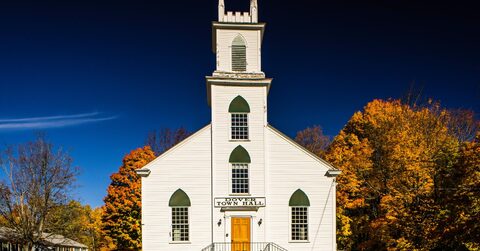
Our bench in southern Vermont handles vintage cast iron cookware restoration for customers in Dover by mail-in service: you ship your piece, we restore it, and we ship it back. We work on skillets, Dutch ovens, griddles, camp cookware, and wood-stove pieces of all ages and conditions. Local in-person drop-off is in the works and will be announced when it opens.
Dover and the Cast Iron That Comes Out of It
Dover is a town that wears its history quietly. The landscape is steep and forested, threaded by the eastern ridge of the Green Mountains, and the residential character is a mix of older farmhouses, seasonal camps, and the ski-area development that grew up around Mount Snow over the past several decades. That combination - working farms, hunting camps, and vacation properties - produces exactly the kind of cast iron that needs serious attention: pieces that sat in unheated outbuildings for a generation, cookware that traveled between a family's primary home and a Dover camp for fifty years, and estate pieces that surface when long-held mountain properties change hands.
The town's older housing stock dates to the nineteenth century in its core farmsteads. Those homes were heated and cooked on wood-burning ranges for most of their early lives, and the cast iron that went with those stoves - Griswold skillets, Wagner griddles, unmarked country foundry pieces - often stayed on the property long after the wood stove was replaced by propane or electric. It is common, in the Vermont antique and estate-sale world, to find a Dover barn that has held the same cast iron for eighty or a hundred years, untouched and quietly rusting in a corner.
What Dover's Climate Does to Cast Iron
The Windham County hills around Dover are damp. Snowpack lingers well into spring on north-facing slopes, and the freeze-thaw cycling that begins in late autumn and runs through March is hard on anything made of bare iron. An unheated barn, a deer camp left vacant from May to October, or a ski condo's storage closet can cycle through dozens of moisture events in a single season. Cast iron is extremely durable but it is not rust-proof, and a piece left with even a thin bare patch - a chip in old seasoning, a worn spot on the cooking surface - will begin to pit within a single Vermont winter.
Summer in Dover brings its own humidity. The valley bottoms hold morning fog well into July, and camp kitchens on small ponds or along brooks can be genuinely damp for weeks at a stretch. A cast iron skillet stored in a camp cabinet without proper seasoning will show surface rust by the Fourth of July if it was put away in May without attention. These are not exotic conditions - they are simply what southern Vermont does to iron, and they are why so many Dover pieces arrive at the bench looking far worse than their actual age would suggest.
The Pieces Dover Customers Typically Send
The cast iron that comes in from Dover falls into a few recognizable categories. The first is farm-kitchen cookware - large skillets, No. 8 and No. 10 pieces, deep Dutch ovens, and long griddles that served as the main cooking surface for a family heating with wood. These pieces are often very old, sometimes pre-dating World War I, and they arrive with decades of carbon buildup layered over genuine surface rust underneath. The seasoning is not salvageable, but the iron beneath frequently is.
The second category is camp and hunting cookware. Dover sits in good deer country, and the tradition of a hunting camp in these hills goes back well over a century. Camp cast iron was used hard, stored rough, and rarely pampered. A camp skillet might have been seasoned with bacon grease in 1967 and not touched again until a family member found it cleaning out a camp this past autumn. These pieces are some of the most satisfying to restore: the iron itself is usually sound because camp cooking at high heat keeps the surface active, but the neglect between sessions has left them thick with carbonized residue and active rust.
The third category is the ski-era acquisition - pieces bought at antique shops in the region during the 1970s and 1980s when vintage cast iron first became collectible, then used occasionally in a ski house and eventually forgotten in a cabinet. Dover had considerable antique-shop activity in that period, as did the surrounding towns, and a fair number of good Griswold and Wagner pieces passed through the region's shops and into local kitchens. Some of those pieces have been sitting in a condo closet ever since.
How the Mail-In Process Works for Dover Customers
Because this is a mail-in service, the logistics are straightforward regardless of where in Dover you are. You wrap the piece securely - cast iron ships best in a sturdy box with generous padding; we provide guidance on that through our common questions page - and drop it at any carrier location. The piece comes to the bench in southern Vermont, which is not a long journey from Dover. Once it arrives, we assess it, photograph the condition, and communicate the scope of work before anything begins. There are no on-site visits, no permits, and no scheduling around access windows.
For a full review of what we handle and how each job is scoped, the our services page lays out the work in detail. The restoration itself involves electrolytic rust removal or lye-bath stripping depending on what the piece needs, surface assessment and any necessary seasoning-layer rebuilding, and a final seasoning that protects the iron for the return trip and for use in your kitchen. The turnaround time and what to expect at each stage are covered honestly on the free consultation page, where you can also describe your piece and get a sense of what the job involves before committing.
Avoiding the Common Mistakes Dover Owners Make
The single most common error we see from Vermont camp and farm owners is the wire-wheel approach: someone who found a rusted skillet in a barn takes an angle grinder or a wire wheel to it before really assessing the piece, and removes metal that did not need to come off. Wire wheels and aggressive abrasives can damage the machined cooking surface of a vintage skillet in minutes. If the piece is a smooth-bottom Griswold or a polished Wagner from the mid-twentieth century, that surface is irreplaceable and worth protecting. The right approach is chemical or electrolytic stripping that lifts rust and carbon without abrading the iron.
The second mistake is attempting to re-season a piece before all the rust is gone. Rubbing oil into a skillet that still has active rust underneath the surface will trap moisture and accelerate pitting. Seasoning is the last step, not a shortcut around the stripping process. If you have a Dover barn find that looks rough, the free consultation page is a good place to start: describe what you have, and we can tell you honestly whether it is a restoration candidate or something that has gone past saving.
A third mistake specific to the camp-cookware context is storing cast iron in sealed plastic containers or plastic bags over a Vermont winter. Trapped moisture in an unheated space is far more damaging than open-air storage with a light coat of oil. A piece left in open shelving with a thin protective seasoning will almost always outlast one stored in a sealed bag.
Why Dover Customers Choose Professional Restoration
Doing this work properly requires equipment and chemistry that most home kitchens cannot accommodate: a lye bath large enough for a No. 12 skillet, an electrolysis tank, pH-neutral rinse protocols, and seasoning oven temperatures that are difficult to achieve consistently in a standard home oven. Beyond the equipment, there is judgment involved in reading a piece of iron - knowing which pitting is cosmetic and which is structural, knowing whether a hairline crack will open under heat, knowing how to treat a lid versus a cooking surface. These are things that come from working on a large number of pieces, not from a single YouTube video.
Dover's combination of old farm estates, active hunting culture, antique-market history, and ski-era acquisitions means that the cast iron circulating in the community is genuinely varied and often genuinely old. A piece that has been in a family for four generations deserves careful hands, not an afternoon experiment. Our areas we serve page shows the full range of southern Vermont communities we work with regularly, and Dover fits naturally into that landscape.
Nearby Areas and the Broader Dover Cast Iron World
Dover connects naturally to the broader cast iron culture of southern Vermont. The towns surrounding it - Wilmington to the west, Wardsboro to the north, Marlboro and Brattleboro a bit further east - all share the same housing character, the same camp and farm traditions, and the same pattern of vintage cookware coming out of estates and barn clearouts. If you are a Dover resident who has inherited or found cast iron from a family property in any of the surrounding hill towns, the same mail-in process covers everything. You do not need to be strictly in Dover's town limits to send a piece our way. The areas we serve index covers the full region.
In-person drop-off service for the Dover area and surrounding Windham County communities is something we are actively developing. When it opens, local customers will be able to arrange a handoff without shipping at all. For now, the mail-in process is reliable, well-documented, and used by customers throughout the region every week.
FAQ
Questions about Dover
- I found a cast iron skillet in a Dover barn that has been there for decades - is it likely salvageable?
- Barn finds from Dover's hill-farm properties are often very good candidates for restoration. Vermont barns are dry enough that cast iron usually rusts on the surface rather than pitting deeply, especially if the piece was well-seasoned before it was stored. The real questions are whether the iron has cracked from a freeze event or from a hard drop. Describe it through our free consultation page and we can give you an honest read before you commit to shipping.
- My family has a hunting camp near Dover and the cast iron there is badly neglected - can you handle pieces in that condition?
- Camp cast iron is some of the most common work we see from southern Vermont. Hard use followed by long storage without seasoning produces thick carbon buildup layered over active rust, but the iron underneath is usually sound. A camp skillet that has seen real cooking is rarely damaged structurally - it is mostly a surface problem. Lye-bath stripping and electrolytic rust removal address exactly this kind of condition reliably.
- Does Dover's damp climate make it harder to maintain cast iron after restoration?
- The humidity in Dover's valley areas and the long shoulder seasons do require a bit more attention than a drier climate would. The key habits are thorough drying after every wash, a very light oil wipe before storage, and avoiding sealed plastic containers in unheated spaces like camp kitchens or garage shelving. A properly seasoned piece maintained this way handles Vermont's climate well. We send every restored piece back with specific care guidance for the region's conditions.
- I have a ski condo in Dover and found old cast iron in a storage closet - how do I know if it is worth restoring?
- Ski-area condos in Dover accumulated some genuinely good vintage cast iron during the antique-market activity of the 1970s and 1980s. If the piece has a smooth, machined cooking surface and maker markings - Griswold, Wagner, or similar - it is almost certainly worth a look. Surface rust and old carbonized seasoning are not death sentences for a piece. Send us a photo and a description through the consultation page before you ship, and we will tell you what we think.
- How do I ship a heavy cast iron Dutch oven from Dover without damaging it in transit?
- A large Dutch oven needs a rigid box with at least two inches of padding on all sides - crumpled paper works well and does not trap moisture the way foam sometimes can. Ship the lid separately within the same box, wrapped individually so the pieces cannot contact each other. We cover packing in detail on our common questions page. Cast iron is heavy but it is not fragile; the goal is simply preventing the box from failing and the piece from striking a hard surface corner.
- Is in-person drop-off available in Dover or nearby?
- Not yet. Local drop-off for the Dover area and the broader Windham County region is something we are building toward, and it will be announced when it is ready. Right now every job is handled by mail-in: you ship the piece to our southern Vermont bench and we ship it back once the work is done. The process is well-documented and used regularly by customers throughout the region, including from the hill towns surrounding Dover.
Start a restoration
Tell us what you have
Send a couple of photos and the markings you can read on the bottom. We will tell you what the piece is, what it needs, and what it costs before anything ships. Identification and assessment are free, and stay free if you decide to do nothing.
Would rather just talk it through? (802) 348-1550