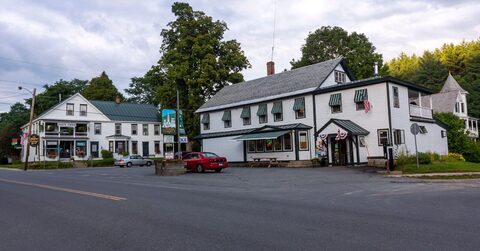
A mail-in vintage cast iron cookware restoration service serves Newfane and the surrounding Windham County hill towns. Every skillet, Dutch oven, griddle, and waffle iron is shipped to our southern Vermont bench, restored by hand, and returned seasoned and ready to cook. Local drop-off and pickup arrangements are in development and will be announced when available.
Newfane and the Character That Shapes This Work
Newfane is the shire town of Windham County, and it carries that distinction in the most physical way possible. The village green is one of the most recognizable in all of Vermont, anchored by a Greek Revival courthouse that has stood since the early nineteenth century. The surrounding properties range from substantial Federal and Greek Revival homes on the green itself to farmhouses and former agricultural holdings spreading up the hillsides toward Williamsville and Grassy Brook. These are old buildings, many of them built when wood cookstoves were the only heat and cooking source in the house, and the cast iron that fed families in them is still turning up in those same kitchens, attics, and outbuildings today.
The community tends to attract people with genuine respect for old things - antique dealers, craftspeople, writers, farmers who kept on farming, and retirees who chose Newfane precisely because it did not modernize itself out of character. That sensibility means a cast iron skillet from a great-grandmother's kitchen is not casually discarded here. It is more likely to be kept, passed on, or set aside in a barn with the intention of eventually doing something with it.
Why Newfane Conditions Create Demand for Restoration
The West River valley that holds Newfane village is a classic Vermont frost pocket. Winters are long and genuinely cold, and the shoulder seasons bring dramatic swings between freezing nights and damp, mild days. Unheated spaces - barns, sugarhouses, mudrooms, cellars under old farmhouses - cycle through freeze and thaw repeatedly from November through April. Bare cast iron left in any of those spaces for even a single Vermont winter will rust. Left for a decade or two, which is entirely common here, a piece can develop deep, flaky rust that looks terminal but very often is not.
Many Newfane-area properties also have root cellars or damp stone-foundation basements where humidity stays high well into summer. Cast iron stored there without seasoning or protective oil does not stand a chance against that sustained moisture. The good news is that thick vintage iron, made before the machined surfaces of modern cookware, is almost always worth restoring even after years of that kind of neglect. The walls and bases are simply heavier than contemporary pieces, and heavy iron survives.
What Newfane Customers Typically Send In
The most common pieces arriving from Newfane reflect the area's agricultural and domestic history. Large #8 and #10 skillets that once lived on wood cookstoves, Lodge and Griswold Dutch ovens used for baked beans and pot roasts through many Vermont winters, and long-handled waffle irons of the type that sat directly on a stove lid are all well represented. Sugaring season has always been central to this part of Windham County, and sugarhouse cookware - particularly the long-legged spiders and deep camp-style kettles used in sugaring camps - shows up regularly.
Estate sales in Newfane and the surrounding towns are a reliable source of pieces that need attention. When a Federal-era farmhouse changes hands after decades in one family, the contents of the kitchen, the summer kitchen, and the barn almost always include cast iron that has not been actively used in years. Some of it is simply dull and dry; some has light rust from a damp cellar; and some has been through enough neglect that it carries layers of carbonized grease, flaking rust, and even lime deposits from contact with a wet stone wall. All of those conditions are workable with the right process.
Barn finds specific to this area sometimes include waffle irons, corn stick pans, and unusual specialty pieces - a gem pan, an old muffin tin with deep round cups, or a combination griddle-and-skillet set that was sold as a matched pair and has not been separated. Antique-minded Newfane buyers who find these at a local auction or through an estate sale often want them in cooking condition rather than display condition, which is a different kind of restoration goal and one worth discussing before the piece is shipped in.
How the Restoration Process Works for Newfane Customers
Because this is a fully mail-in service, Newfane customers ship their cast iron to our bench rather than waiting for someone to come to them. The process is straightforward: visit our services page to understand what each restoration level covers, then reach out through the free consultation page to describe what you have and what condition it is in. We will confirm the right service level and walk through the shipping process.
For heavy pieces - a large Dutch oven, a #10 or #12 skillet, or a camp kettle - proper packing matters. Double-boxing with adequate padding prevents both damage to the piece and damage to the shipping container. We provide specific guidance for each piece once we have confirmed the job. Once the iron arrives at the bench, we assess it in person before any work begins, and we communicate with the customer if the condition is significantly different from what was described. Newfane customers who have never shipped cookware before should not find this process daunting; it is genuinely simple once the piece is wrapped securely.
Turnaround depends on the scope of work. A piece with light rust and good bones can be cleaned, re-seasoned, and returned relatively quickly. A piece with deep rust, heavy carbon buildup from decades of use on a wood stove, or damage that requires careful evaluation will take longer. We are transparent about timeline at every stage.
The Work Itself: What Restoration Actually Means
Restoration of a piece from a Newfane farmhouse attic is not the same as a quick scrub and a wipe of oil. Heavy carbon deposits that built up over decades of wood-stove cooking are chemically different from the kind of seasoning a well-maintained skillet develops, and they require different handling. Rust removal has to be thorough without damaging the surface of the iron itself. Re-seasoning, done in layers in a controlled environment, produces a surface that is genuinely functional rather than just cosmetically improved.
The goal for cooking pieces is always a smooth, even, properly polymerized seasoning that will hold up to regular use. Display pieces that a Newfane customer wants to preserve without cooking in them get a different treatment - one focused on stopping further oxidation and stabilizing the surface. Both outcomes are legitimate, and understanding which one fits the piece and the customer's intention is part of what makes the free consultation step worth doing before shipping anything.
Mistakes to Avoid With Newfane Barn Finds and Estate Pieces
The most common mistake we see with pieces from this area is well-intentioned but damaging home treatment before shipping. Soaking cast iron in water to loosen rust seems logical but accelerates further oxidation, especially in the kind of damp conditions common to Newfane cellars. Wire-brushing with an aggressive rotary tool can leave marks in the iron that are difficult to reverse. And re-seasoning a piece that still has carbon buildup or active rust simply traps the problems under a thin layer of oil that will not adhere properly.
Another common issue is assuming a piece is too far gone. Severe rust from years in an unheated barn or a stone cellar looks alarming, but cast iron that has structural integrity - meaning it is not cracked, not warped, and has no pitting deep enough to compromise the cooking surface - is almost always restorable. If you are uncertain whether a piece is worth shipping, the common questions page covers the most frequent concerns, and our consultation process exists exactly to help you make that call.
Why Newfane Customers Choose Professional Restoration
There is a do-it-yourself tradition in this part of Vermont that is real and earned. People in Windham County tend to be capable and self-reliant, and cast iron restoration tutorials are easy to find online. But the gap between a tutorial and a good outcome on a genuinely old, heavily neglected piece is significant. The techniques that work on a moderately rusty modern skillet do not always translate to a pre-1940 Griswold with eighty years of wood-stove carbon and a winter of frost damage on top of it.
Customers in Newfane also tend to have pieces that matter - a grandmother's skillet, a piece pulled from a family sugaring camp that has been in use since before living memory, or a set of cookware that came with a farmhouse and carries the weight of that history. Sending those pieces to a bench where the work is done carefully, with an understanding of what vintage iron actually is and how it behaves, is a different proposition than experimenting at home with a method borrowed from a video. The areas we serve index shows the full range of communities we work with across this part of Vermont, and Newfane sits squarely in the heart of that territory.
Neighboring Communities and Areas
Residents throughout the Newfane area can use the same mail-in process, including those in Williamsville, South Newfane, and the farms and woodlots along Grassy Brook Road and the West River corridor. Townshend, just upriver, has a similar housing stock and comparable barn-find culture. Dover, Wardsboro, and Jamaica, on the hillier terrain to the west, produce their share of sugarhouse and hunting-camp cast iron as well. Any customer in this part of Windham County can reach us through the areas we serve page to confirm coverage and start the process.
FAQ
Questions about Newfane
- I found a cast iron skillet in the cellar of my Newfane farmhouse and it is heavily rusted. Is it worth restoring?
- Almost certainly yes. The stone-foundation cellars common under Newfane-area farmhouses are damp and cold, exactly the conditions that cause deep rust, but they rarely cause the kind of structural damage that makes a piece unrestorable. If the iron is not cracked, severely pitted, or warped, it is a strong candidate. Send us a description and a few photos through our consultation page and we can give you a clear answer before you ship anything.
- I bought a Dutch oven at a Newfane estate sale and it has thick, black, carbonized buildup inside. Is that different from rust, and do you handle it?
- Yes, it is different and yes, we handle it. That heavy black buildup is carbonized grease and food residue that accumulated over decades of wood-stove cooking, which is extremely common in pieces from older Windham County homes. It requires thorough removal before any re-seasoning, because new seasoning will not bond properly over carbon. The process takes more time than a simple rust job, but the result is a fully functional cooking surface.
- I have a waffle iron that came from a sugarhouse near Newfane. It has hinge damage and one side is slightly warped. Can that be restored?
- Waffle irons from Vermont sugarhouses and farmhouses are among the pieces we see most often from this area, and they do frequently arrive with hinge wear and heat-related warping. Minor warping in the hinge mechanism is often addressable; severe warping that prevents the iron from closing flat is more limiting. Describe the specific condition when you reach out for a consultation and we will walk through what is realistic before you commit to shipping it in.
- How do I pack a large #10 skillet or a camp kettle for shipping from Newfane without damaging it?
- Heavy pieces from this area need double-boxing and generous padding - crumpled paper or foam on all sides, with the piece wrapped separately so it cannot shift. The outer box should have no movement at all when you shake it. We provide specific packing guidance for each job once we confirm the work, so reach out before you pack anything. A well-packed skillet ships safely from anywhere in Vermont without issue.
- I want to keep a cast iron piece from a Newfane family farmhouse for display, not cooking. Do you restore pieces that way?
- Absolutely. Display restoration is a distinct goal from functional restoration, and we treat them differently. For a display piece, the focus is stabilizing the surface, stopping active oxidation, and preserving the patina and markings rather than building up cooking seasoning. Pieces with foundry marks, lid logos, or visible history often look best with a conservation approach rather than a full cooking restoration. Tell us your intention upfront and we will match the treatment to the goal.
- Is there any plan for local drop-off so I do not have to ship a heavy piece from Newfane?
- A local drop-off and pickup arrangement for the southern Vermont area is in development and will be available in the future, but it is not open yet. For now, every job is handled by mail. For large or heavy pieces from the Newfane area, we make the shipping process as straightforward as possible with clear guidance on packing and carriers. Most customers find it simpler than expected once they have done it once.
Start a restoration
Tell us what you have
Send a couple of photos and the markings you can read on the bottom. We will tell you what the piece is, what it needs, and what it costs before anything ships. Identification and assessment are free, and stay free if you decide to do nothing.
Would rather just talk it through? (802) 348-1550