Mismatched vintage waffle iron halves: restore together or
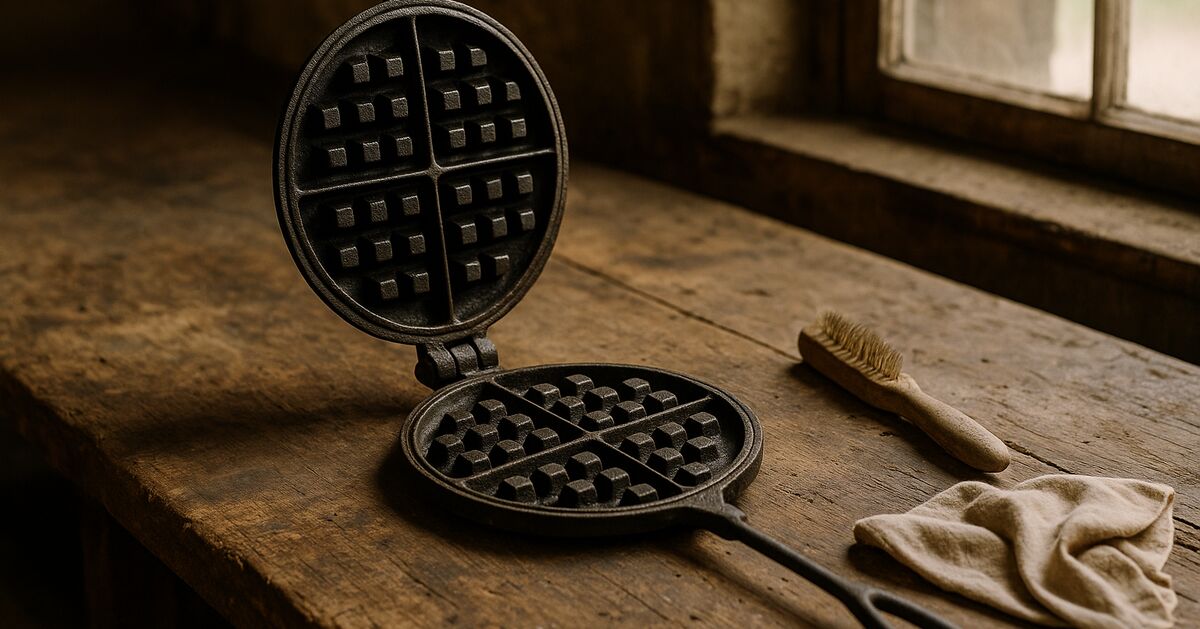
A cast iron waffle iron sitting on a Vermont barn shelf with a mismatched top and bottom half is one of those finds that stops you cold. You can see the quality in both pieces, but something is off. Maybe the top is Griswold and the bottom is unmarked. Maybe they're both Griswold but from different generations. The question that follows is genuinely tricky: do you restore them together as a working set, or do you value and treat them separately?
This post is going to walk through the real factors involved, because the answer is not the same for every waffle iron, and getting it wrong can cost you either money or a perfectly good cooking tool.
Why mismatched waffle irons are so common
Waffle irons were hard-working kitchen tools. Unlike a skillet that might sit in a cabinet for decades untouched, waffle irons were brought out repeatedly, often for Sunday breakfasts, church gatherings, or holiday mornings. The hinge mechanisms wore out. Handles cracked or broke. Half of a set would get dropped, warped from overheating, or simply lost during a move.
Because both halves are heavy cast iron and essentially symmetrical in function, people mixed and matched replacements all the time. A household in Newfane or Grafton in the 1920s wasn't going to order a replacement half from a catalog and wait weeks. They'd pick up a stray half at a general store or swap one from a neighbor. The result, a century later, is a lot of assembled pairs that were never sold together.
What this means practically is that mismatched waffle irons are not rare curiosities. They're a normal outcome of long use. The mismatch doesn't automatically make either half worthless, but it does affect how you should think about restoration.
How to determine whether the halves actually match
Before making any decision, you need to know exactly what you have. Here are the things to check on both halves independently.
Maker's marks and foundry identification. Turn each half over and look at the back. Most quality American waffle irons from the late 1800s through the mid-1900s carry foundry marks, patent dates, or size numbers. Griswold pieces typically carry the Erie, Pennsylvania mark and a pattern number. Wagner pieces from Sidney, Ohio are similarly marked. If one half carries a clear maker's mark and the other is blank or carries a different name, you have a confirmed mismatch.
Size numbers. Waffle iron halves were cast in numbered sizes, and those numbers are not interchangeable. A No. 8 top will not seal correctly against a No. 7 bottom. The gap will allow batter to leak, and the cooking surface won't press evenly. Check both halves for a size number and confirm they match before anything else.
Pattern and grid design. Even two halves from the same foundry in the same size can come from different production eras and carry slightly different grid depths or border profiles. Hold the two cooking faces together and look for a consistent gap all the way around. An uneven gap means the casting profiles don't align properly, even if the size numbers match.
Hinge and bail compatibility. Many waffle irons were sold with an external hinge assembly or bail handle that connected the two halves over a stove burner or coals. If one half has hinge lugs and the other doesn't, or the lug spacing differs, you have a functional problem even if the cooking faces match perfectly.
Our frequently asked questions page covers some of the foundry identification basics if you need help decoding what you're looking at.
The functional question: will it actually cook a waffle?
This should come before the value question, honestly. A mismatched pair that cooks a beautiful, evenly browned waffle is a kitchen tool. A perfectly matched museum-quality pair that leaks batter from a misaligned seam is a display piece.
If the two halves close flat, the size numbers agree, the grid patterns align, and the hinge mechanism (or a new reproduction hinge) holds them together securely, then functionally you have a waffle iron. The mismatch is a provenance issue, not a cooking issue. Restore it as a set and use it.
If the halves don't close evenly, or the grid profiles leave a wide uneven gap, or there's no practical way to hinge them together, then restoring them as a "set" is misleading. You'd be presenting something as functional when it isn't.
The restoration work itself, stripping old seasoning and rust, re-seasoning the cooking surfaces, cleaning the exterior, is the same whether you treat them together or separately. What changes is how you present and store them afterward. Our cast iron restoration services cover waffle irons specifically, and we can assess the fit before any cleaning begins.
The collector value question: together or apart?
Here is where it gets more layered. Collector value in vintage cast iron generally rewards completeness, matching provenance, and rarity. A complete, matched, fully functional Griswold waffle iron in good condition is generally considered more desirable by collectors than either half alone. That's a reasonable assumption.
But a mismatched set is a different matter. Presenting mismatched halves as a set to a knowledgeable collector is unlikely to fetch a premium, since experienced buyers tend to notice mismatches. Experienced buyers in the cast iron collecting community, and there are very active ones across New England, from Brattleboro to Bellows Falls, will spot the mismatch immediately and discount accordingly.
Separating the halves and valuing them individually can sometimes yield better results, particularly if one half is from a more collectible foundry or carries a clearer, sharper mark. A single Griswold half with a crisp Erie mark and a clean pattern number has standalone value to a collector who already owns or is hunting for its matching half. It's not ideal, but it's honest.
Our post on how to tell whether an old cast iron skillet is worth anything covers the general principles of cast iron valuation, and most of those principles apply to waffle irons too. Sharpness of the casting, clarity of markings, and condition of the cooking surface all matter.
One thing that genuinely helps is researching whether your specific half is a known "orphan" from a popular set. Some waffle iron patterns were produced in very large numbers, and collectors hunting for a matching half are out there. If you have the rarer half of a common pattern, it may be worth more than you think.
What restoration actually does to value
Restoration done correctly, meaning careful stripping without aggressive mechanical abrasion, thorough seasoning, and no filling of pits or cracks, should not reduce the value of a collectible piece. A clean, properly seasoned half is easier to evaluate than one buried under decades of carbonized grease.
Restoration done poorly, sanding down the casting surface, using wire wheels that leave scratches, or applying thick layers of spray-on seasoning that hide the original metal, can reduce value meaningfully. If either half of your waffle iron has exceptional collector interest, the stripping method matters.
Our related post on lye, electrolysis, and the self-cleaning oven goes into detail on what each method actually does to the metal. For waffle irons, where the grid pattern has fine relief and the casting is often thinner than a skillet, gentler methods tend to give better results.
Specific scenarios and what we'd recommend
Both halves are the same foundry, same era, same size number, but slightly different pattern generations. Restore together. The functional and visual mismatch is minimal. Use it or sell it as a working set with an honest description of the variation.
One half is a major named foundry (Griswold, Wagner, Favorite, Wapak), the other is unmarked or a generic hardware-store brand. Consider separating. The named half has standalone collector interest. The unmarked half may be best suited for functional use or sold at a modest price as a conversation piece.
The halves are from two different named foundries. Separate and value independently. Neither collector is going to want the other brand's half. Clean both, identify both, and let each find its proper home.
The halves simply don't close evenly. Do not restore as a set. It's not a set. Clean each half individually, identify what you have, and be straightforward about the situation.
If you're in the area and want a hands-on assessment before committing to any approach, getting in touch with us is the simplest starting point. We work with customers across the region, including Athens, Dummerston, Wilmington, Dover, Halifax, and Guilford, and we're used to seeing waffle irons in all states of assembly and disassembly.
A note on hinge hardware and bail handles
One underappreciated factor is the hinge assembly. Many vintage waffle irons used a separate iron or steel hinge that connected the two halves and allowed them to pivot over a stovetop burner. This hardware is often lost or badly rusted even when the cast iron halves themselves are in fine shape.
Reproduction hinges are available from specialty suppliers, and a skilled metalworker can fabricate a functional replacement. If you're restoring a mismatched pair primarily for use rather than collection, a well-made replacement hinge solves the functional problem cleanly. If you're restoring for collection, original hardware matters, and a reproduction hinge should be disclosed clearly.
The bail handle, the arched handle that lets you flip the iron over the heat source, is also frequently separated from the halves over time. Matching bail handles to specific foundry patterns is its own research project, and original hardware in good condition adds real value.
What to look up before you decide
A few reference points that can help you make a more informed call:
- The Griswold and Cast Iron Cookware Association (GCICA) maintains collector resources and can help identify specific pattern numbers.
- Casting marks, patent dates, and size numbers are the primary identifiers. Photograph both halves in good light before contacting any appraiser or restoration service.
- Online collector forums have members who specialize specifically in waffle irons and can often identify a half from a clear photograph within hours.
You can also browse our full list of service areas or read more on the blog for related topics on cast iron identification and care.
The short version
A mismatched vintage cast iron waffle iron is not automatically broken or worthless. It's a common result of a century of hard use and practical improvisation. The right approach depends on whether the halves function together, where their individual collector value lies, and how honest you want to be with whoever ends up with them next.
Restore together when the fit is sound and the mismatch is minor. Separate when the foundries, sizes, or profiles genuinely don't belong together. And before you do either, take the time to actually identify what you have. The iron itself will tell you, if you know where to look.
For help with identification or restoration anywhere from Putney to Brookline and the surrounding towns, we're here to take a look.
Sources & further reading
- Griswold and Cast Iron Cookware Association collector resources (Griswold and Cast Iron Cookware Association)
- Conservation and care of metal objects (National Park Service Museum Management Program)
Revision history (1)
- Sep 2, 2026 - Pre-publish editorial QA: clean; claim audit: 4 claims, 2 rewritten
Claim-by-claim audit (4 checked)
- “A complete, matched, fully functional Griswold waffle iron in good condition is generally considered more desirable by collectors than either half alone.” (rewritten to what the article can stand behind)
- “Presenting mismatched halves as a set to a knowledgeable collector is unlikely to fetch a premium, since experienced buyers tend to notice mismatches.” (rewritten to what the article can stand behind)
- “Restoration done correctly, meaning careful stripping without aggressive mechanical abrasion, thorough seasoning, and no filling of pits or cracks, should not reduce the value of a…” (reasoning shown in the article)
- “Restoration done poorly, sanding down the casting surface, using wire wheels that leave scratches, or applying thick layers of spray-on seasoning that hide the original metal, can …” (reasoning shown in the article)
Start a restoration
Tell us what you have
Send a couple of photos and the markings you can read on the bottom. We will tell you what the piece is, what it needs, and what it costs before anything ships. Identification and assessment are free, and stay free if you decide to do nothing.
Would rather just talk it through? (802) 348-1550