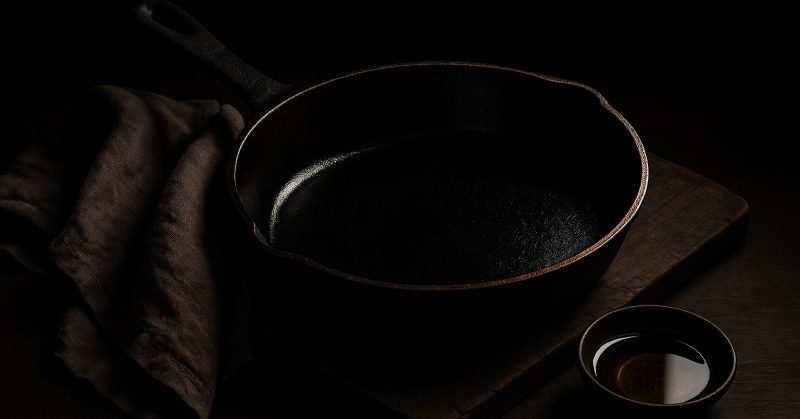
Seasoning is not a coating in the way paint or enamel is a coating. It is a thin layer of polymerized oil that has chemically bonded to the iron surface. Understanding that one fact makes almost every practical rule obvious, and makes most of the folklore fall away on its own. The iron is porous at a microscopic level. Oil gets into those pores, and when it reaches a temperature above its smoke point in the presence of oxygen, it undergoes polymerization - long chain molecules link together and cross-link again, forming a hard, hydrophobic, slick material that is no longer oil in any meaningful sense. It does not wash away because it is no longer soluble. It does not go rancid because oxidation is what turned it into the polymer in the first place. A pan with good seasoning is not greasy; it is dry to the touch, dark, and slightly shiny. Greasiness means the process did not finish.
What polymerization actually is, and why it matters for every decision you make
Polymerization in this context is a heat-driven oxidative reaction. Unsaturated fats - meaning fats with double bonds in their carbon chains - polymerize more readily than saturated fats. Flaxseed oil became fashionable among collectors a decade or so ago because it is highly unsaturated and polymerizes aggressively. The trouble is that it polymerizes so aggressively it can build up a brittle layer that flakes. Crisco and lard, which have been used in cast iron kitchens for over a century, have a more moderate unsaturation profile and tend to build seasoning that stays put. Refined coconut oil, Crisco, lard, and most refined vegetable oils all work. The specific oil matters far less than two other variables: how thin the coat is, and whether the temperature stays above the smoke point long enough.
Thin coats are not a stylistic preference. A thick coat of oil never fully polymerizes through its depth. The outside hardens while the inside stays soft and gummy. That gummy layer is then trapped under the next coat and under the next one. The pan ends up sticky, and no amount of additional baking fixes a layer that never converted. The correct approach is to apply oil, then wipe almost all of it back off - the pan should look nearly dry before it goes into the oven. Many people wipe it on and then do not wipe it back, which is the single most common cause of sticky seasoning.
Temperature matters equally. Every oil has a smoke point - the temperature at which it begins to oxidize visibly. Polymerization happens at and above that point. Baking a pan at a temperature below the oil's smoke point produces a coat that has softened and spread but not converted. The generally recommended oven temperature for seasoning runs from around 450 to 500 degrees Fahrenheit for most common oils. Cast iron holds and distributes that heat well, which is part of why it takes seasoning so reliably. Duration matters too - an hour at temperature is typical, and the piece should cool in the oven or at room temperature slowly rather than being hit with cold air.
The soap myth and its actual origin
The instruction to never use soap on cast iron is everywhere. It is also, in its modern form, wrong - or at least it is a rule that made sense in an earlier era and has been carried forward without the context that gave it meaning.
Household soap before the mid-twentieth century was typically lye-based, meaning it contained or left behind free sodium hydroxide. Lye is strongly alkaline. Polymerized oil is reasonably stable against mild alkalinity, but prolonged contact with free lye will saponify the seasoning - convert it back to soap - and strip it from the iron. That is a real effect, and the prohibition made real sense when soap meant lye soap.
Modern dish soap is a synthetic detergent. It contains surfactants that help lift grease and food, but at the concentration present in a diluted sink wash, it does not saponify polymerized oil. A brief wash with modern dish soap, followed by rinsing and thorough drying, does not damage a well-established seasoning layer. The seasoning that comes off during dish soap washing was not fully polymerized to begin with. The prohibition is folklore that has outlived the chemistry that created it. Even so, soaking a pan in soapy water for an extended period is a different matter - the prolonged contact can degrade seasoning that is thin or imperfectly cured, and soaking is always worth avoiding.
Water, the actual enemy, and how to handle it
Water itself is not the problem. Cast iron is used in wet cooking environments constantly - braising, boiling, steaming - and none of that harms properly maintained iron. The problem is standing moisture and slow or incomplete drying. Iron rusts when it is wet and exposed to oxygen over time. The reaction is straightforward and unforgiving on bare iron, but a good seasoning layer is hydrophobic and slows it considerably. The vulnerability is at bare spots, at the rim, at the handle junction, and anywhere the seasoning is thin.
After washing, dry the pan immediately and thoroughly. A brief stint on a low burner evaporates residual moisture faster than a towel can. If you are going to store the pan for any period longer than a few days, wipe the interior with a very thin coat of oil first. The exterior and the bottom can benefit from the same treatment if storage conditions are damp.
Cast iron stored in unheated buildings - barns, garages, sheds - is at particular risk in climates where temperature swings create condensation. A piece that looks fine in warm months can arrive for restoration with a uniform surface rust from a single winter. Wrapping in newspaper or storing in a cloth bag helps buffer moisture fluctuations. Silica gel packets in a sealed container are more effective but impractical for large collections.
The dishwasher
Cast iron and dishwashers are incompatible, but the reason is not the detergent. Dishwasher detergent is more concentrated and more alkaline than hand dish soap, which is a real difference, but the larger problem is time and heat cycling. A dishwasher cycle keeps the piece wet for an extended period, then blasts it with hot air that can create uneven thermal stress, then leaves it sitting damp until the door is opened. That combination strips seasoning, can cause rust to form before the drying cycle finishes, and in extreme cases can warp thin or damaged pieces. Keep cast iron out of the dishwasher.
Metal utensils
Metal utensils do not harm the iron. They can scratch the seasoning surface, and a sharp metal edge worked aggressively in the same spot will eventually cut through to bare iron. That matters less than it sounds. Scratched seasoning is not damaged iron. The scratch fills back in during cooking and re-seasoning cycles, and the iron beneath it is not compromised. The instruction to use only wooden or silicone utensils comes partly from the same tradition as the no-soap rule - it applies more cleanly to enamel cookware, where scratching the glassy coating is genuinely destructive, than to bare cast iron.
Where metal utensils do cause a real problem is with pieces that have thin, brittle, or flaking seasoning. Running a metal spatula under old flaking seasoning can lift and peel it in sheets. That is not damage caused by the utensil; it is damage that was already present and merely revealed. The underlying issue is the seasoning, not the tool.
Acidic foods
Cooking acidic foods in cast iron - tomatoes, citrus, wine reductions, vinegar-based dishes - is a genuine concern, but it is a conditional one. A well-seasoned pan with several good coats of polymerized oil is not harmed by a brief encounter with acid. An occasional tomato sauce finished in a skillet for ten or fifteen minutes does little or nothing to established seasoning. The problems arise in two situations: prolonged simmering of strongly acidic foods over an hour or more, and pans with thin or recently applied seasoning.
Acid attacks bare iron directly and attacks imperfectly polymerized oil faster than it attacks fully cured seasoning. If your pan is new to seasoning or has been recently stripped and re-done, it is worth waiting a few weeks of regular use before running long acidic braises. A pan that has been in regular service for years handles occasional acidic cooking without issue. There is also a flavor question that is separate from the seasoning question: prolonged cooking of acidic foods in cast iron can impart a metallic taste to the food. That is an iron solubility effect more than a seasoning effect, and it is worth knowing about independently.
Storage: stacking, lids, and long-term
Stacking cast iron is fine with one precaution: do not stack cast iron with other materials - particularly enamel pieces - unless there is a buffer between them, because the weight and hardness of the iron will chip enamel. Cast iron on cast iron is generally tolerable. A paper towel between stacked pieces absorbs any residual moisture and prevents the surfaces from pressing together for extended periods, which can cause slight oil transfer and staining.
Lids stored with their pieces trap any moisture that is present. Store lids separately, slightly ajar, or place a folded paper towel across the rim before setting the lid. This applies particularly in humid climates.
Long-term storage of pieces that will not be used for months - and this comes up often with collections - calls for a thorough clean, a thin coat of oil on all surfaces including exterior and handle, and a breathable wrap. Airtight storage sounds protective but can trap whatever moisture is present at the time of sealing. Breathable cloth or paper allows moisture to escape rather than condense on the iron.
Reading what is wrong with a pan
Most problems with cast iron seasoning announce their cause in how they look and feel. Getting the diagnosis right matters because the fix for sticky seasoning and the fix for flaking seasoning are not the same, and applying the wrong one wastes time or makes things worse.
Sticky or tacky seasoning means oil that did not fully polymerize. The cause is almost always one of three things: too thick a coat, too low an oven temperature, or too short a baking time. The fix is not to add more oil. Adding more oil over a sticky base builds up more incompletely polymerized material. The correct fix is to bake the pan at proper temperature with no additional oil, which drives the existing soft polymer further toward conversion. If the stickiness is severe or has built up over many layers, stripping and starting over is faster and cleaner than trying to bake through a deep gummy accumulation.
Patchy or uneven seasoning is normal in a pan that is new to seasoning or that has been through heavy use. It is not a malfunction. The light-colored patches are areas where the seasoning is thin or where food or utensils have worn through. Continued cooking, especially with fats, fills these in over time. If the patches are bare iron showing surface rust, a light scrub to remove the rust followed by seasoning coats addresses them directly.
Flaking seasoning is a different problem and the most concerning of the three. Seasoning that peels away in chips or sheets has delaminated from the iron surface. This happens when buildup has been applied too thick too fast, when the base iron surface was not clean when seasoning was started, or when moisture got between layers during curing. Flaking seasoning cannot be baked back into place. It needs to be removed, the surface taken back to bare iron, and the seasoning rebuilt from scratch. Trying to season over flaking seasoning results in more flaking. This is the situation that most often benefits from professional electrolytic stripping, because it removes all residue evenly without the risk of leaving embedded carbonized material that causes the new seasoning to fail in the same way. See our restoration services page for what that process involves.
Symptom table
| Symptom | Likely cause | Fix |
|---|---|---|
| Sticky or tacky surface | Oil applied too thick, or baked at too low a temperature | Bake at proper temperature with no added oil; strip and restart if severe |
| Flaking or peeling seasoning | Buildup too thick, surface contamination, or moisture during curing | Strip completely, clean to bare iron, rebuild from scratch |
| Patchy light-colored areas | Thin or worn seasoning, normal in newer pans | Continue cooking with fat; season coats will fill in with use |
| Light surface rust, uniform | Humidity or storage without protective oil coat | Scrub rust with fine steel wool or chain mail, re-season |
| Heavy or pitted rust | Prolonged exposure to moisture, possibly years of neglect | Electrolytic stripping or professional restoration; see services |
| Metallic taste in food | Bare iron contact with acidic food, or thin seasoning | Build seasoning before cooking acidic dishes again |
| Uneven color after seasoning | Uneven oil application or uneven oven heat | Normal; additional coats even out with use |
| Smoke during first few uses after seasoning | Residual oil finishing polymerization | Normal and temporary; ventilate and continue using |
The daily routine
None of what follows requires much time. A pan in good condition stays that way with minimal effort, and the following sequence works whether you have cooked eggs or seared a steak.
- While the pan is still warm - not screaming hot - wipe out any food residue with a paper towel or cloth. Most residue comes out easily at this stage.
- If food has stuck or carbonized, add a small amount of water to the warm pan and scrub with a stiff brush, chain mail scrubber, or the coarse side of a sponge. This lifts stuck material without needing prolonged soaking.
- Rinse the pan. A brief rinse with dish soap is fine if there is real grease to cut. Do not soak.
- Dry the pan immediately and thoroughly with a towel, then set it on a low burner for one to two minutes to drive off residual moisture. The surface should be bone dry.
- While the pan is still warm from the burner, wipe a very thin coat of oil over the interior - just enough to look barely glossy, not enough to pool. Wipe away any excess.
- Store the pan in a dry location, not sealed in plastic, and without a lid trapping moisture inside.
That is the whole routine. It takes under five minutes. Pans maintained this way develop seasoning incrementally with every use rather than requiring periodic stripping and re-seasoning cycles. The best cast iron in daily use often has seasoning that has never been deliberately applied - it built up over years of cooking, drying, and light oiling after each use.
When home care is not enough
Most seasoning problems are fixable at home. Rust that is heavy enough to have pitted the cooking surface, seasoning that has carbonized and built up over decades into a surface that no longer cooks evenly, warped pieces, or cracks in the iron itself are past what re-seasoning addresses. A cooking surface that is uneven because of deep pitting or carbon buildup cooks unevenly regardless of how good the seasoning becomes. The same is true of a piece with active corrosion working through a thick layer of old polymerized material - the source of the rust cannot be reached without removing what covers it.
If you are unsure whether a piece needs professional attention or just some home effort, the identification guide and dating guide can help you understand what you have, and the quote request form lets you describe the piece and send photographs before committing to anything. The FAQ covers what the restoration process involves in plain terms. For pieces where the question is whether restoration is worth doing relative to value, the value guide gives context for making that decision honestly.
Questions
Common questions
Can I use soap on cast iron?
Yes. The rule dates from when household soap was lye-based and would genuinely strip a finish. Modern dish soap will not remove cured seasoning. What harms a pan is leaving it wet, not washing it.
Can cast iron go in the dishwasher?
No. Not because of the detergent alone but because of the long wet cycle and the drying phase, which together will flash-rust bare spots and lift a weak finish.
What oil should I season with?
Any oil will polymerize. The practical differences are small and hotly overstated. We use a neutral oil applied in very thin coats and cured above its smoke point, which matters far more than which bottle it came from.
My seasoning is patchy. Do I need to strip it?
Usually not. Patchy seasoning on an otherwise sound pan evens out with use. Stripping is for rust, for crusted buildup that has gone lumpy, or for a finish that is actively flaking into food.
Is a little rust dangerous?
Surface rust is not a health emergency, and it comes off. Rust that has pitted the cooking surface is a different matter, and that is worth getting looked at.
Start a restoration
Tell us what you have
Send a couple of photos and the markings you can read on the bottom. We will tell you what the piece is, what it needs, and what it costs before anything ships. Identification and assessment are free, and stay free if you decide to do nothing.
Would rather just talk it through? (802) 348-1550