Le Creuset
Le Creuset is a French enameled cast iron manufacturer founded in 1925 in Fresnoy-le-Grand, France. It has sold in the United States for decades and remains in production today. Collectors seek out the vintage French-made pieces, particularly those produced before manufacturing shifted or quality controls changed, for their enamel depth, casting weight, and the absorbed history of a long-running enameling tradition.
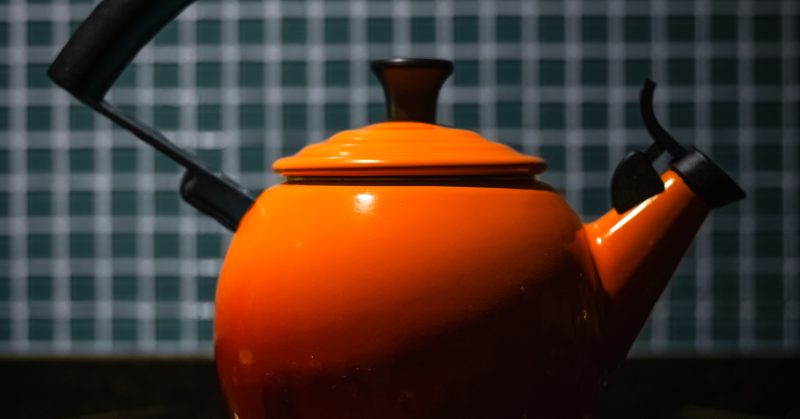
The marks, and what each one dates it to
| Era | Mark | What it tells you |
|---|---|---|
| 1920s - 1940s | "LE CREUSET" cast into the base with a size number, often accompanied by "MADE IN FRANCE"; no country of manufacture was legally required for the French domestic market, so some early pieces carry only a size numeral | Earliest production. The casting quality on confirmed examples from this period is generally regarded as finer, with heavier walls and more consistent enamel application. Attribution to this era depends more on construction details than on mark alone, since mark documentation for the earliest years is not fully settled. |
| 1950s - 1970s | "LE CREUSET MADE IN FRANCE" cast into the base; size numbers cast prominently; some pieces also carry a pattern number or a retailer mark stamped or fired onto the enamel | The most commonly encountered vintage Le Creuset on the American market. Export pieces for the U.S. market reliably carry "MADE IN FRANCE" during this period. The Cousances name occasionally appears on pieces that share construction characteristics, reflecting the 1957 acquisition of that foundry. |
| 1957 onward (Cousances pieces) | "COUSANCES" or "COUSANCES MADE IN FRANCE" cast into the base, sometimes alongside "LE CREUSET" after the brand consolidated; the Cousances mark alone indicates pre-consolidation or transitional stock | Cousances was an older foundry also based in France, acquired by Le Creuset in 1957. Pieces marked only "COUSANCES" predate full consolidation and are collected in their own right. Pieces that carry both names are generally dated to the transitional period. Collectors disagree about exactly when dual-marking ended. |
| 1970s - 1990s | "LE CREUSET FRANCE" or "LE CREUSET MADE IN FRANCE" continuing; some pieces carry a two-letter country code ("FR") introduced for certain export markets; color name sometimes stamped or fired onto enamel on the underside | Quality during this span is debated among collectors. Many regard mid-1970s through 1980s pieces as a transitional era where enamel thickness varied more noticeably across the product range. Pieces from this period are still usable and still French-made, but command less of a premium than confirmed earlier examples. |
| 1990s - present | "LE CREUSET" with country of origin; post-2000 pieces often include additional compliance markings, a raised website URL on some pieces, and updated logo treatments; some production moved outside France for certain product lines | Modern pieces are well-made by general cookware standards but are not vintage and are not the subject of this page. Pieces in this era that omit "MADE IN FRANCE" or carry another country of manufacture are outside the vintage French tradition collectors seek. |
What Le Creuset is, and where it fits
Le Creuset is not an American foundry. It belongs to the French enameled cast iron tradition, and strictly speaking it sits outside the scope of American cast iron collecting. It appears in this reference library for practical reasons: vintage Le Creuset and Cousances pieces turn up constantly at American estate sales, thrift stores, and online marketplaces, often alongside American-made cast iron, and their owners need reliable information. The makers directory focuses on American foundries, but this page addresses the pieces collectors actually encounter.
The company was founded in 1925 in Fresnoy-le-Grand, in the Aisne department of northern France. It has operated continuously since then, which makes it unusual among the foundries covered in this library. Most American vintage cast iron comes from companies that no longer exist. Le Creuset is alive and selling new product, which complicates the collector picture considerably.
The Cousances connection
In 1957, Le Creuset acquired Cousances, a foundry with roots considerably older than Le Creuset itself. Cousances had its own casting and enameling tradition, and pieces marked "COUSANCES" are collected separately by some enthusiasts. After the acquisition, the two lines ran in parallel for a period whose exact length is not fully settled in collector literature. Eventually the Cousances name was phased out in favor of the Le Creuset brand, but pieces carrying only the Cousances mark, and pieces carrying both marks, appear regularly on the used market. A piece marked only "COUSANCES MADE IN FRANCE" predates or belongs to the early transitional period and is generally considered older than a dual-marked piece.
If you are trying to date a piece, the Cousances mark alone is a useful bracket. The Cousances-only era ends somewhere in the decades following 1957, but collectors disagree about the precise cutoff, and the evidence for a single clean end date is thin.
Recognizing Le Creuset by construction, not just marks
The base mark is the starting point, but it is not the whole story. Here is what to look at on the piece itself.
Enamel character. Vintage French enameled cast iron, including Le Creuset and Cousances, uses a two-coat enamel system: a dark primer coat fused to the iron, then a color coat on top. On older pieces, the enamel at the rim and on the outer walls tends to have a slight texture and depth that modern spray-applied enamels do not replicate. The interior of earlier pieces often shows a cream or off-white enamel that can develop a honey or tan patina with use. This is normal and not damage.
Wall thickness and weight. Earlier French pieces tend to have heavier, more uniform walls than later production in the same size. This is a general tendency, not a rule, and confirming it requires handling enough examples to develop a feel for the range. If a piece feels light or thin-walled for its stated size, that warrants closer attention to the marks.
Lid fit. On well-made older pieces, lids seat closely and rock very little. A lid that fits loosely on what is presented as an early piece may indicate a mismatched lid from a later run, or a different piece altogether.
Color. Le Creuset's signature flame orange is the most recognized color, but the company produced pieces in many colors across its history, including a range of yellows, greens, blues, and neutrals. Color alone does not date a piece. Some colors were produced in limited runs; others ran for decades. The value guide addresses which colors collectors currently find more desirable, without reference to specific prices.
What Le Creuset made well
The core product - round and oval Dutch ovens, also called cocottes or French ovens - is what the company built its reputation on, and the older examples of these are the pieces worth seeking. The enamel on a well-preserved early cocotte is durable, easy to clean, and genuinely non-reactive with acidic foods in a way that bare cast iron is not.
Skillets and sauteuse pans from the vintage French range are less commonly encountered in the American market but are usable and well-made when found. Gratin dishes, terrines, and the oval fish dishes that appear occasionally in estate sales are interesting pieces with a narrower collector audience.
The company also produced fondue sets, serving pieces, and decorative items that show up regularly. These are collectible in their own right but are lower priority for a cook who wants functional vintage ware.
What it made indifferently
Le Creuset's reputation is for its enameled pieces. The company has made some bare cast iron over the years, but this is not its tradition and not what collectors seek from a French maker. Bare-iron pieces marked Le Creuset exist but are uncommon and not particularly distinguished compared to what American foundries produced in the same era.
Some of the smaller accessory pieces - trivets, butter warmers, small sauce pots - show more variation in enamel quality than the flagship cocottes. This is not unusual for a manufacturer with a wide range, but it is worth noting when inspecting a piece.
What is still argued over
Several things that collectors and online sources treat as established facts are not well-supported by primary evidence.
The precise year that enamel formulas or application methods changed is not documented publicly. Claims that quality declined in a specific decade are common in collector communities, but they are based on collective impression and anecdote rather than documented manufacturing records.
The full sequence of marks, including exactly when certain marks were introduced and retired, is not fully mapped in any publicly available authoritative source. The mark timeline on this page reflects the general collector consensus, but that consensus has gaps.
The relationship between specific color names and specific production years is also disputed. Some colors are associated with particular decades in collector lore, but the evidence for precise color-to-date attributions is often thin.
Whether Cousances pieces are superior, equal, or inferior to contemporary Le Creuset pieces of the same type is genuinely contested. Both camps exist among serious collectors, and the honest answer is that the evidence does not firmly favor either position.
Reproductions, fakes, and commonly confused pieces
Le Creuset is a living brand with wide retail distribution, which means the most common confusion is not deliberate faking but honest mislabeling. A modern piece sold as vintage is the primary concern, not a hand-crafted counterfeit.
Points to check: modern pieces often carry a raised website address on the base; they may carry compliance markings not present on older pieces; and pieces made outside France will not carry "MADE IN FRANCE." A seller describing a current-production piece as vintage, whether knowingly or not, is the scenario to watch for.
Other French enameled cast iron makers, including Staub and various unmarked French foundry production, can be confused with Le Creuset or Cousances. If a piece carries no mark at all, or an unfamiliar mark, use the identification guide before assuming a maker.
Some vintage pieces carry retailer marks - department store names, housewares chain names - in addition to the Le Creuset base mark. These were common for export pieces sold through specific distributors. A retailer mark does not make a piece less authentic; it often helps bracket the era if the retailer's dates are known.
How it cooks today
Vintage Le Creuset and Cousances pieces are functional on gas, electric coil, and glass-top electric ranges. The enamel coating means they do not require the same seasoning maintenance as bare cast iron, but they are not indestructible. High heat without liquid, sudden temperature changes, and metal utensils all risk damaging the enamel on any enameled piece, old or new.
Induction compatibility depends on the specific piece. Many older Le Creuset pieces are induction-compatible because cast iron is magnetic, but the base geometry of some older designs does not make full contact with induction cooktops. If induction use matters to you, test the piece before committing.
For care guidance that applies to enameled cast iron generally, see the care section of this library.
An honest word on value
Vintage Le Creuset occupies a moderate collectibility band. Early confirmed pieces - particularly those from the first few decades of production, and well-preserved Cousances pieces - command a premium over later French production. Common mid-century Dutch ovens in the standard flame color, in good condition, are still affordable relative to the most sought-after American cast iron. Pieces in unusual colors, very large sizes, or with confirmed early marks tend to attract more collector interest. Condition matters enormously: enamel chips, cracks, or heavy staining reduce desirability significantly. If you have a piece you are unsure about, a quote request is the practical first step before making any decisions about buying or selling.
Looking for a piece by Le Creuset?
Stock here is one piece at a time and it moves. Say what you are after and we will write to you when a piece by Le Creuset is listed. Nothing else, ever, and one click stops it.
Questions
About Le Creuset
How do I know if my Le Creuset piece is actually vintage and French-made?
The most reliable indicator is the base mark. Pieces that carry "MADE IN FRANCE" or "FRANCE" as part of the cast mark are French-made. Modern pieces produced outside France will carry a different country of origin, and some carry a raised website URL on the base, which is a clear indicator of recent production. Wall weight, enamel texture, and lid fit can support a dating assessment, but the mark is the starting point. If the mark is worn or unclear, the identification guide can help.
Is a piece marked "Cousances" different from Le Creuset, and does it matter?
Cousances was a separate French foundry acquired by Le Creuset in 1957. Pieces marked only "COUSANCES" predate the full consolidation of the two brands and are generally considered older than dual-marked pieces. Some collectors actively prefer Cousances pieces and pursue them separately. Whether they are objectively better than equivalent Le Creuset pieces from the same period is genuinely contested among collectors - both positions have advocates, and the evidence does not strongly favor either side.
The enamel inside my vintage Le Creuset has turned dark brown or honey-colored. Is it ruined?
No. The cream or off-white interior enamel on older Le Creuset pieces darkens with use over time. This is a normal result of cooking, not damage. It does not affect the safety or function of the piece. What does matter is whether the enamel is chipped, cracked, or flaking - those conditions mean the underlying iron is exposed and the piece should be assessed more carefully. A darkened but intact enamel surface is considered by many collectors to be part of the character of a well-used vintage piece.
Can I use a vintage Le Creuset on my glass-top or induction stove?
Glass-top electric ranges are generally fine for vintage enameled cast iron, provided you avoid sliding the piece across the surface, which can scratch the glass. Induction is more complicated. Cast iron is magnetic and should in principle work on induction, but some older Le Creuset base designs are not perfectly flat, which can cause uneven heating or induction cooktop errors. Test with a magnet first to confirm the piece is magnetic, then test cautiously on low heat before full use. If the base rocks noticeably, contact with the induction element will be inconsistent.
My piece has a retailer name on it alongside the Le Creuset mark. Does that affect its value or authenticity?
Retailer marks - department store names, specialty kitchen store names, or distributor stamps - were common on Le Creuset pieces exported to the United States and sold through specific retail channels. They do not indicate a lesser or different piece. In some cases, knowing which retailer carried a line can help narrow the production period, since retailers' relationships with importers changed over time. A retailer mark alongside a genuine Le Creuset base mark does not reduce authenticity, and for some buyers it adds interesting provenance context.
Start a restoration
Tell us what you have
Send a couple of photos and the markings you can read on the bottom. We will tell you what the piece is, what it needs, and what it costs before anything ships. Identification and assessment are free, and stay free if you decide to do nothing.
Would rather just talk it through? (802) 348-1550