Lodge Manufacturing Company
Lodge Manufacturing Company has operated in South Pittsburg, Tennessee since 1896, making it the last major American cast iron foundry still producing cookware under its original name. For a reader trying to sort old iron from new, Lodge is the essential baseline: understanding what Lodge made in each era, and how to read its marks, is the starting point for almost every identification question in American cast iron.
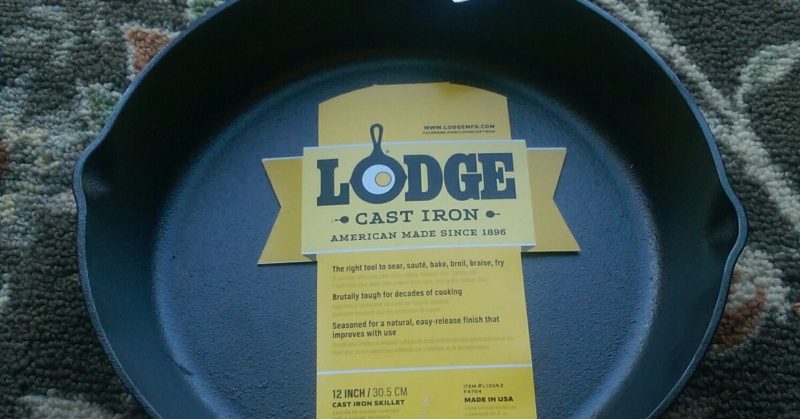
The marks, and what each one dates it to
| Era | Mark | What it tells you |
|---|---|---|
| 1896 - early 1900s | No consistent mark identified by collectors; early pieces are generally unmarked or carry only a size numeral and a heat ring on the base. | Attribution to this period is based on casting characteristics rather than marks. Treat any specific year claim with caution. |
| Early 1900s - 1930s | LODGE cast in an arc above a size numeral, often with MADE IN USA below; gates typically cleaned but surface texture still noticeably rough by later standards. | The arc logo in this form is the mark most associated with pre-war Lodge. Pieces from this range are the ones collectors call early Lodge or three-notch era iron when the gate scar count matches. |
| 1930s - 1950s (approx.) | Three raised notches on the heat ring of skillets, combined with the arc LODGE mark; base lettering may include a pattern number. | The three-notch feature is the most discussed casting detail in Lodge collecting. It is a production aid, not a mark in the strict sense, but it brackets a desirable period. Collectors disagree on exactly when it was phased out. |
| Mid-20th century (dates disputed) | Arc logo continues; helper handle style changes; heat ring retained on some forms, dropped on others; surface finish begins to smooth slightly relative to earlier production. | The transition from pre-war to post-war production is not cleanly documented in the public record. Specific year claims made online should be treated as approximations. |
| Late 20th century - present | LODGE LOGIC and later LODGE CAST IRON branding on packaging; pieces marked with the arc logo and MADE IN USA; modern production adds a pebbly machine-applied seasoning and raised logo on the base. | Modern Lodge is immediately distinguished from vintage production by the pebbly seasoning texture and by the thicker, heavier castings with less refined gate work. These are new pieces, not collectibles. |
Lodge among American foundries
Lodge Manufacturing Company is, by any reasonable measure, the most important surviving name in American cast iron. Founded in South Pittsburg, Tennessee in 1896, it has operated continuously under that name through periods that closed every one of its major competitors. Griswold is gone. Wagner is gone. Birmingham Stove and Range is gone. Lodge is still pouring iron in the same Tennessee town where it started.
That continuity matters to collectors in a specific way. Because Lodge never stopped making cast iron, its production spans more than a century and sits in two very different markets at once: vintage Lodge from roughly the first half of the twentieth century is collected and traded as desirable antique cookware, while modern Lodge is mass-market hardware available new at most kitchen retailers. Learning to tell the two apart, and to place a given piece within Lodge's long production history, is one of the most common tasks in cast iron identification.
Company history in outline
The founding of Lodge in 1896 is established. The finer details of the company's early decades, including the full range of what it made, how its workforce was organized, and exactly when various product lines began or ended, are not comprehensively documented in sources available to collectors. What is clear is that by the early twentieth century Lodge was producing a broad range of cast iron cookware including skillets, Dutch ovens, griddles, and specialty pieces, and was selling nationally.
Lodge survived the mid-century contraction of the American cast iron industry, when cheaper aluminum and then non-stick coatings pulled consumers away from cast iron, by continuing to operate at reduced scale and then by riding the renewed interest in cast iron that built through the late twentieth century and accelerated sharply in the 2000s and 2010s. The company invested in updated foundry equipment and introduced its pre-seasoned Logic line in the early 2000s, which brought Lodge to a much wider retail audience. Today Lodge is the default answer when someone asks where to buy new American-made cast iron.
Reading an unmarked Lodge
Marks are useful, but casting characteristics often tell you more, especially on unmarked or lightly marked pieces. Lodge iron from the first half of the twentieth century has several consistent physical traits worth knowing.
Surface texture. Pre-war and early post-war Lodge has a relatively smooth cooking surface compared to modern production. The iron was ground or polished after casting. Modern Lodge, by contrast, has a distinctly pebbly or dimpled surface, which comes from the machine-applied factory seasoning process and from a different approach to finishing. If you strip a modern Lodge piece, you will find that pebbled texture is in the iron itself, not just the seasoning. This is the single fastest way to separate vintage from modern Lodge.
Weight and wall thickness. Vintage Lodge tends to be lighter and thinner-walled than modern Lodge of the same nominal size. This is a general trend across the vintage American cast iron industry, not unique to Lodge, but it is pronounced when you hold old and new side by side. Modern Lodge is noticeably heavier for a given size.
Gate scars and finishing. On vintage Lodge, the gate scar - the point where the iron was fed into the mold - is usually on the handle or the base, and it is cleaned to a reasonable degree. On modern Lodge, gate work is present and less refined. This reflects differences in production priority across the eras.
The heat ring. Many vintage Lodge skillets have a raised ring on the base, called a heat ring, which was designed to sit on the grate of a wood or coal stove. Modern Lodge skillets generally do not have heat rings. The presence of a heat ring is a useful early indicator that a piece is vintage, though it does not by itself confirm maker or period.
The three-notch era
The most discussed Lodge casting feature among collectors is the three notches - three raised bumps or tabs on the heat ring of skillets from a particular production period. These are a production aid, used to keep pieces separated in the annealing or finishing process, and not a decorative or intentional marking. Collectors use the presence of three notches as a rough bracket for what they consider the most desirable Lodge production, generally placed somewhere in the 1930s through 1950s, though the exact dates are disputed and collectors disagree about them openly.
The three-notch designation has become something of a shorthand for quality in the Lodge collector community. Pieces with three notches tend to have the smoother cooking surfaces and lighter weight that collectors value. Whether the notches themselves are a reliable proxy for those qualities across all pieces is debated. If you are dating a piece by the three-notch feature, treat the result as a rough bracket, not a confirmed date.
The good Lodge and the ordinary
Lodge's core product has always been the skillet, and its vintage skillets in common sizes - particularly the 8, 9, 10, and 12 inch - are what most collectors seek. These are generally well-made pieces with even walls and, in the better examples, very good cooking surfaces after restoration.
Dutch ovens, both camp style with legs and lid-loop handle, and flat-bottom kitchen style, were a significant Lodge product line and remain so today. Vintage Lodge Dutch ovens are useful and reasonably common. They are not particularly rare in most sizes.
Specialty pieces - waffle irons, corn stick pans, novelty molds - were made by Lodge but are less consistently documented. Attribution of unusual Lodge specialty pieces should be approached carefully, particularly for pieces without clear marks. Lodge made some specialty items that are now uncommon, but the specialty category is also where misattribution is most frequent.
Lodge's post-war production, from roughly the 1950s onward into the modern era, is generally considered less refined than earlier work by collectors, though it remains functional cookware. The decline in surface finish mirrors industry-wide trends of that period.
Mark changes and what they tell you
The arc LODGE logo is the persistent identifying mark across most of the twentieth century. It appears in various configurations with MADE IN USA, size numerals, and in some periods pattern numbers. The arc itself did not change dramatically enough across the century to allow precise dating from the logo alone.
What does change, and what collectors use for rough dating, is the combination of the mark with physical features: heat ring presence, surface finish, gate scar placement, helper handle style, and the three-notch feature on skillets. No single feature gives you a date. A cluster of consistent features gives you a reasonable bracket. For a fuller discussion of how to use these features together, see the dating guide.
Modern Lodge pieces post-2000s typically carry the LODGE arc mark plus LODGE CAST IRON branding, are sold with a factory seasoning, and are identifiable at a glance by the pebbly surface texture described above.
What to be careful of
Lodge's situation with reproductions is different from that of Griswold or Wagner. Because Lodge is still making iron, the main confusion is not fakes but misrepresentation of era: modern Lodge pieces sold as vintage, either through ignorance or intent. The pebbly surface texture test is reliable here. A stripped modern Lodge skillet has that texture in the bare iron. A vintage Lodge skillet, stripped, has a smoother surface.
Sellers sometimes describe modern Lodge as vintage, collectible, or old simply because it looks like old iron once it is seasoned. This is worth knowing when buying from non-specialist sources.
Lodge pieces are also sometimes confused with products from other southern foundries of the mid-twentieth century that used similar arc-logo styles. If a piece has an arc logo but lacks LODGE or carries a different name, it is not Lodge. Several regional foundries used visually similar mark layouts.
Unmarked pieces attributed to Lodge should be treated as unconfirmed unless supporting physical characteristics are consistent. Unmarked cast iron is very difficult to attribute with confidence to any specific maker. The identification guide covers the general approach to unmarked pieces.
Living with one now
Vintage Lodge performs well on modern cooking surfaces. The lighter weight of older pieces relative to modern Lodge is an advantage on glass-top and induction stoves, where heavy cast iron can be awkward to move safely. Vintage Lodge skillets heat reasonably evenly and hold heat well, as cast iron generally does.
On induction cooktops, cast iron works well as a rule, and Lodge, vintage or modern, is no exception. The flat base of kitchen-style vintage Lodge sits well on smooth-top electric and gas grates. Camp-style Dutch ovens with legs are not designed for flat stovetop use and should not be forced onto a glass-top surface.
Restored vintage Lodge generally behaves the same as any well-seasoned cast iron. There is no material difference in cooking performance between a properly restored three-notch skillet and a modern Lodge of the same size, though collectors and enthusiasts disagree about this with some passion. See the care guide for seasoning and maintenance.
What they fetch, honestly
Lodge vintage iron, as a category, sits in the everyday collectibility band. Common sizes of vintage Lodge skillets remain among the more affordable pieces of desirable vintage American cast iron. They are not rare, they are not particularly hard to find, and they do not command the premiums that Griswold or Wagner pieces in comparable condition will bring.
Within vintage Lodge, the three-notch era pieces in very good condition, particularly in less common sizes, do command a modest premium over later Lodge or over pieces in rough condition. Unusual specialty pieces, if attribution is solid, can attract more interest. But as a general rule, Lodge is where collectors start when budget matters, and where experienced cooks go when they want functional vintage iron without paying a collector premium. For a broader discussion of how condition and era affect what pieces are worth, see the value guide.
Where the evidence runs out
Several things about Lodge's history are genuinely unclear in the public record, and collectors should know this rather than accept confident claims at face value.
The exact dates when specific marks appeared and disappeared are not cleanly documented. Dates circulating in collector communities are often based on inference from physical characteristics rather than company records, and they are frequently presented with more confidence than the evidence supports.
The precise years of the three-notch production period are disputed. Ranges given online vary by a decade or more depending on the source.
Early Lodge production before the arc logo era is poorly understood. Very early pieces are difficult to attribute with confidence, and claims about specific very early Lodge pieces should be treated skeptically without strong supporting documentation.
The full range of specialty and novelty pieces Lodge produced, particularly in the mid-twentieth century, is not comprehensively cataloged in any publicly available source known to this shop. If you have an unusual piece attributed to Lodge and want a second opinion, contact us for a quote or consult the Lodge makers page for community discussion links.
Looking for a piece by Lodge Manufacturing Company?
Stock here is one piece at a time and it moves. Say what you are after and we will write to you when a piece by Lodge Manufacturing Company is listed. Nothing else, ever, and one click stops it.
Questions
About Lodge Manufacturing Company
How do I tell vintage Lodge apart from modern Lodge?
The most reliable test is surface texture. Strip the piece down to bare iron and look at the cooking surface. Modern Lodge, produced from roughly the early 2000s onward, has a pebbly or dimpled texture that is in the iron itself, not just the seasoning. Vintage Lodge has a noticeably smoother surface. Weight is also a useful clue: modern Lodge tends to be heavier and thicker-walled than older production of the same nominal size. The presence of a heat ring on the base is a strong indicator of vintage production, as modern Lodge skillets generally do not have them.
What does three-notch mean and why do collectors care about it?
Three-notch refers to three small raised tabs or bumps found on the heat ring of certain Lodge skillets, generally placed by collectors in a production window spanning roughly the 1930s through 1950s, though exact dates are disputed. The notches were a production aid, used to keep pieces separated during finishing or annealing, not a decorative feature. Collectors value this period of Lodge production because it tends to coincide with smoother cooking surfaces and lighter castings. The notches themselves are a rough bracket for that era, not a guarantee of any specific quality.
Is Lodge cast iron worth collecting, or should I focus on Griswold or Wagner?
That depends on what you want from collecting. Vintage Lodge is genuine American cast iron from a continuous operating foundry, and in good condition it cooks as well as anything comparable. It sits in the everyday collectibility band, meaning it is generally more affordable than Griswold or Wagner in similar condition. If cooking performance is the priority, Lodge is a practical choice. If rarity and mark variation are the draw, Griswold and Wagner offer more complexity. Lodge is also a good starting point for collectors who want to develop an eye for casting quality without significant financial risk. See the value guide for more context.
My Lodge skillet has no mark at all. Could it still be Lodge?
It is possible, but unmarked pieces are genuinely difficult to attribute to any specific maker with confidence. Very early Lodge production is not well documented and may be unmarked or carry only a size numeral. However, the same is true of many other foundries from the same era. Attribution of an unmarked piece to Lodge should rest on a cluster of consistent physical characteristics - surface texture, wall thickness, gate scar placement, heat ring style - rather than on the absence of a competing maker's mark. If you need a firm opinion, the identification guide covers the approach, and you can also send the piece to us for assessment.
Can I use my vintage Lodge skillet on a glass-top or induction stove?
Generally yes, with reasonable care. Vintage Lodge kitchen-style skillets have flat bases that sit acceptably on smooth-top electric and induction surfaces. Cast iron works well with induction as a rule. The main practical concern on glass-top stoves is weight: sliding a heavy skillet can scratch the surface, so lift rather than drag. Camp-style Lodge Dutch ovens with legs are not suitable for flat cooktop use. Vintage Lodge tends to be lighter than modern Lodge of the same size, which makes it somewhat easier to handle on these surfaces. The care guide has more detail on modern stove compatibility.
Start a restoration
Tell us what you have
Send a couple of photos and the markings you can read on the bottom. We will tell you what the piece is, what it needs, and what it costs before anything ships. Identification and assessment are free, and stay free if you decide to do nothing.
Would rather just talk it through? (802) 348-1550